

Authorization places a temporary hold on a card, while capture is the follow-on step that submits those held funds for settlement and moves money toward the merchant. The two actions serve different purposes in the payment flow, and mixing them up causes reconciliation errors, lingering customer holds, and avoidable disputes. We reference Visa and FDIC guidance throughout this explainer to keep the operational detail accurate.
TL;DR:
- Preserve the original transaction identifier across every increment, capture, and reversal; exact matching lets issuers connect messages and release unused authorized funds.
- Capture shipped goods at fulfillment, but capture digital goods at checkout; if the authorization expires first, the merchant must obtain a new authorization.
- Visa guidance calls for reversals promptly, generally within a day, when a sale will not proceed or the final charge is lower than the hold.
- Reconcile capture requests daily against processor reports and bank deposits, not original authorizations, because processors may not confirm when funds reach the merchant account.
Table of Contents
- What is preauthorization? Holds, estimates, and card-on-file charges
- What is capture? Settlement, batching, and why reconciliation matters
- Authorization vs capture: a side-by-side comparison for merchants
- How the authorization-to-capture flow works: a step-by-step checklist
- Merchant use cases: lodging, car rental, dining, and e-commerce
- Hold durations, reversal timing, and the cost of waiting too long
- Operational best practices: reconciling, automating, and documenting
- Why reporting clarity matters for authorization and capture operations
- How PaySec supports clean authorization and capture reporting
- FAQ
- Sources
What is preauthorization? Holds, estimates, and card-on-file charges
Authorization confirms that a card is valid and that the cardholder has sufficient available balance for a purchase. It does not move funds. Instead, it places a hold that reduces the customer's available credit or balance until the merchant captures the transaction or the hold expires. According to FDIC guidance, authorization reserves the funds but does not initiate the transfer, a distinction that drives most of the operational rules merchants need to follow.
Some business models require more than a flat authorization. An estimated authorization approximates a final charge when the exact amount is not yet known, and an incremental authorization adds to that estimate as charges grow, such as extending a hotel stay. Networks expect merchants to preserve the original transaction identifier (TID) across every related message so issuers can match increments, captures, and reversals to the same transaction.
- A hotel check-in typically triggers an estimated authorization covering room rate and anticipated incidentals.
- A subscription service storing a card on file often runs a small estimated authorization before the first recurring billing cycle.
- A car rental counter authorizes an estimate that includes the rental rate plus a buffer for fuel or damage.
Preserving TIDs and linking identifiers at this stage sets up clean captures and reversals later.
What is capture? Settlement, batching, and why reconciliation matters
Capture is the action that actually moves the held funds toward settlement. Once a merchant captures a transaction, the issuer releases the reserved funds and begins the settlement process that eventually deposits money into the merchant account. Capture can happen two ways: immediate capture, where the sale is captured the moment the transaction is approved, or batched capture, where the merchant holds the authorization open until fulfillment and then submits a batch of captures for processing.
Settlement flows from the issuer through the acquirer before reaching the merchant's bank, and most processors validate and forward captures to issuers in batches rather than in real time. According to Visa Acceptance developer documentation, captures are commonly validated and sent to issuers in batches, and processors may not send an automated notice confirming the funds have landed in the merchant account.
- Immediate capture suits point-of-sale retail, where the final amount is known at the moment of sale.
- Batched or delayed capture suits fulfillment-based businesses, where the charge should wait until goods ship.
- Reconciliation should match capture requests against processor capture reports and bank deposits, not against the original authorization alone.
Our guide on settlement periods for merchants walks through typical deposit timing in more detail.
Authorization vs capture: a side-by-side comparison for merchants
Authorization and capture differ across several practical dimensions that shape how a business should configure its payment flow. The table below lines up the dimensions that matter most for day-to-day operations.
| Dimension | Authorization (hold) | Capture |
|---|---|---|
| Purpose | Confirms card validity and reserves funds | Submits held funds for settlement |
| Timing in customer journey | At checkout, check-in, or order placement | At checkout, shipment, or fulfillment |
| Effect on cardholder funds | Reduces available balance, no transfer yet | Initiates transfer toward the merchant |
| Typical time window | Several days before expiry, per issuer policy | Must occur within the authorization window |
| Merchant action required | Send auth, track TID, add increments if needed | Send capture referencing original TID |
| Accounting impact | No revenue recognition yet | Revenue recognition and reconciliation begin |
A few operational takeaways follow from this comparison:
- Capture at checkout when the final sale amount is confirmed immediately, such as a retail counter sale.
- Hold the authorization open and capture at fulfillment when the amount or timing is uncertain, such as a shipped order.
- Lodging and car rental businesses should lean on estimated and incremental authorizations rather than one large initial hold.
Shopify's merchant guidance confirms that capture must occur within the authorization period, whether a merchant chooses automatic capture at checkout or manual capture at fulfillment.
How the authorization-to-capture flow works: a step-by-step checklist
Payments teams can treat the authorization-to-capture sequence as a repeatable process rather than a case-by-case judgment call.
- Send the authorization and store the transaction identifier (TID) returned by the processor; this identifier links every future message back to the original hold.
- Send incremental authorizations if needed, preserving the same TID and using the correct indicators so the issuer recognizes the increase as part of the original transaction.
- Send the capture referencing the original TID once the final amount is known; for partial captures, include the exact amount and the correct partial-capture flag.
- Send a partial authorization reversal when the captured amount is lower than the full authorized amount, matching identifiers exactly so the issuer releases the unused portion.
Visa Acceptance developer documentation explains that partial authorization reversals release only the unused portion of an authorization, and that auth, partial reversal, and capture sequences follow defined math: the total authorized amount equals the original authorization plus any increments, minus prior reversals and non-voided captures.
Pro Tip: Build TID preservation into your integration from day one. Retrofitting identifier tracking after a reconciliation problem surfaces costs far more time than designing for it up front.
Accurate field data at every step is what allows issuers to match messages correctly and release holds without delay.
Merchant use cases: lodging, car rental, dining, and e-commerce
The right authorization and capture pattern depends heavily on the business model.
- Lodging: Properties run an estimated authorization at check-in, add incremental authorizations for room service or extended stays, and send a partial reversal at check-out if the final folio is lower than the hold.
- Car rental: Counters authorize an estimate covering the rental plus fuel and a damage deductible. Visa guidance for lodging, car rental, and cruise lines notes that estimated authorizations should reflect the actual charge structure, not incidentals like tips or unrelated deposits.
- E-commerce: Many online sellers capture at fulfillment for physical goods that ship days after purchase, while digital or downloadable goods are typically captured at checkout since the final amount and delivery are immediate.
- Dining and delivery: Table-service restaurants often add a tip adjustment before final capture, while delivery platforms using a virtual terminal may capture closer to order confirmation than a physical terminal would.
Our primer on payment processing approval covers how approval fits alongside these authorization patterns.
Hold durations, reversal timing, and the cost of waiting too long
Authorization holds do not last indefinitely, and the window varies by issuer and merchant category. Many merchant help resources describe typical hold durations lasting several days, though this depends on the issuer's own policy and the merchant category code involved, according to Bank of America merchant guidance. Once a hold expires, it falls off the cardholder's account and the merchant can no longer capture against it.
Visa best practices call for authorization reversals to be processed promptly, generally within a day when a transaction will not proceed or when the final captured amount is less than the authorized amount, according to Visa's authorization and reversal processing guidance. Sending a reversal promptly, rather than letting a hold expire naturally, frees up the customer's available balance faster and reduces inbound service inquiries.
- Reversal messages need exact matching identifiers from the original authorization, or issuers cannot remove the hold.
- Holding onto unused authorizations longer than necessary ties up customer funds and invites disputes.
- Repeated late reversals can expose a merchant to network scrutiny over misuse of the authorization system.
Our detailed guide to handling payment reversals covers how to build this into a standard operating procedure.
Operational best practices: reconciling, automating, and documenting
A handful of habits prevent most authorization and capture problems before they start.
- Preserve the original TID across every increment, capture, and reversal message tied to a transaction.
- Set a 24-hour reversal service level, reversing any authorization known to be unused as soon as that status is confirmed.
- Reconcile daily, matching capture requests against processor capture reports and bank deposit records, and logging any exception immediately.
- Document the capture timing policy, whether capture-at-checkout or capture-at-fulfillment, so customer service and finance teams give consistent answers about when a charge will post.
Pro Tip: Treat daily reconciliation as a non-negotiable line item, not a monthly cleanup task. Catching a mismatched capture the same day it happens is far easier than untangling it weeks later.
Choosing between capture-at-checkout and capture-at-fulfillment often comes down to how predictable the final amount is and how long fulfillment takes; the longer the gap, the stronger the case for holding the authorization open until shipment.
Why reporting clarity matters for authorization and capture operations
Most of the friction merchants run into with authorization and capture comes down to visibility: knowing which authorizations are still open, which captures have matched to a deposit, and where a transaction identifier got dropped somewhere along the chain. Clear, detailed transaction reporting turns that guesswork into a checklist.

We built our reporting around the operational reality described throughout this guide: merchants need to see open holds, matched captures, and settlement status in one place rather than reconstructing it from processor statements after the fact. That visibility is what lets a payments team reverse an unused authorization inside a 24-hour window instead of days later, and reconcile deposits against capture reports without manual spreadsheet work.
When evaluating any processor, we'd encourage looking closely at reporting clarity and interchange transparency, since both directly determine how easily a team can manage the authorization and capture lifecycle day to day.
— PaySec Marketing Team
How PaySec supports clean authorization and capture reporting
Our payment gateway and merchant reporting are designed to address key challenges such as tracking open holds, matching captures to deposits, and maintaining transaction identifiers from authorization through settlement.
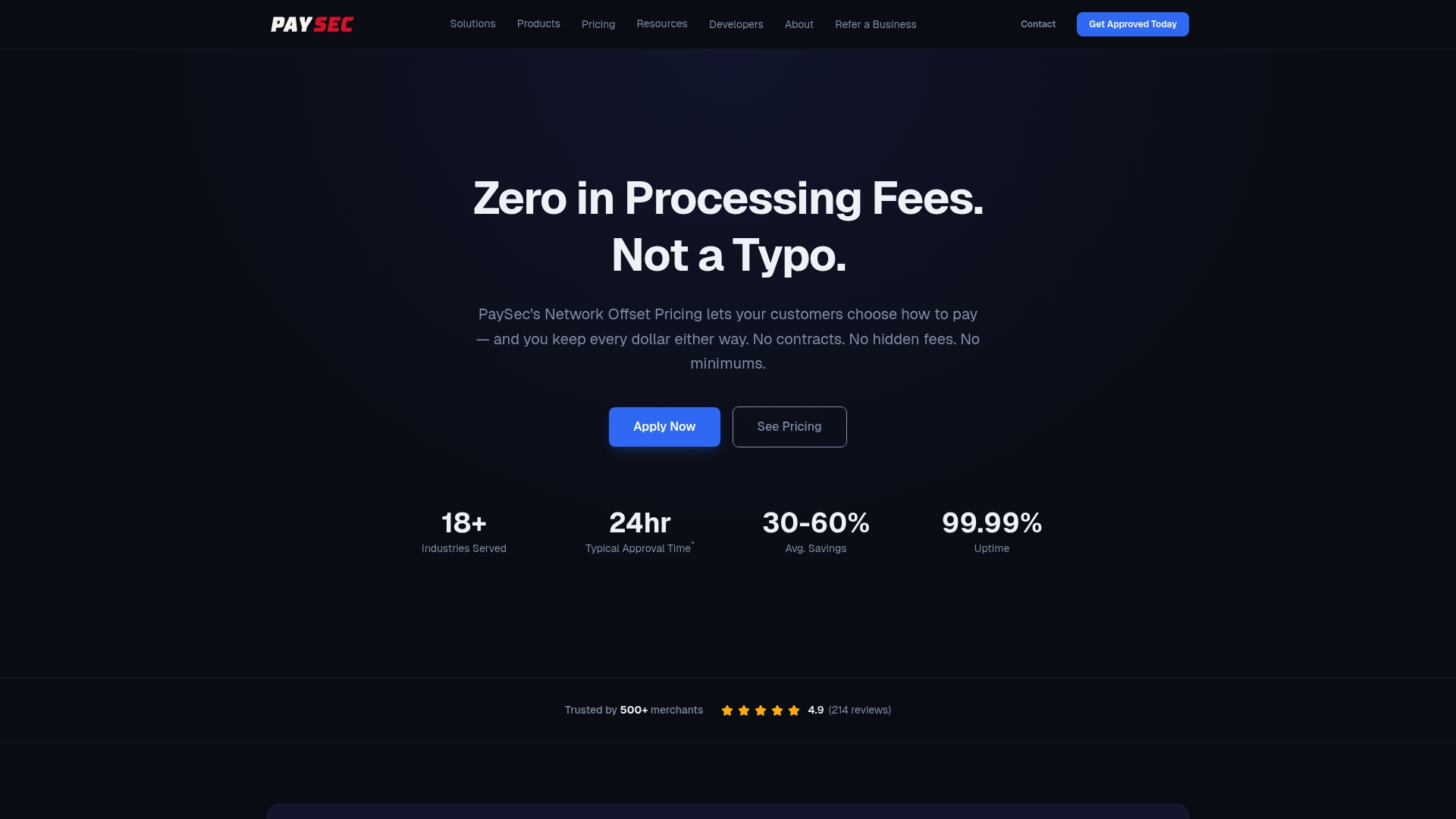
Our pricing passes through wholesale interchange rates instead of flat-rate markups. This pricing model works alongside detailed transaction reporting that supports straightforward authorization and capture reconciliation.
- Detailed transaction reporting shows open authorizations, captures, and settlement status in one view.
- Our pricing structure avoids hidden fees and does not require long-term contracts or minimums.
- Our eCommerce Gateway and Merchant Services support different capture timing configurations to fit various business needs.
Compare our pricing plans to see how Network Offset, Flat Rate, and Custom Enterprise options line up with your transaction volume and reporting needs.
FAQ
What is the difference between payment authorization and capture?
Authorization places a temporary hold on a cardholder's available funds to confirm the card is valid and has sufficient balance, while capture is the follow-up action that actually submits the held funds for settlement. According to FDIC guidance, no money moves until capture occurs.
What does it mean when a payment is captured?
A captured payment means the merchant has submitted the authorized amount for settlement, starting the process that moves funds from the issuer through the acquirer toward the merchant's account. Many processors batch these captures and forward them to issuers together, according to Visa Acceptance developer documentation.
What are the main types of payment methods merchants accept?
Merchants commonly accept card-present transactions at a physical terminal, card-not-present transactions online or by phone, ACH and bank transfers, and mobile or contactless payments. Each method follows its own authorization and capture handling, particularly around timing and fraud checks.
What does "payment not captured" mean?
A payment marked "not captured" means the authorization hold is still active but the merchant has not yet submitted it for settlement, so no funds have transferred. If the authorization window expires before capture, per Shopify's guidance, the merchant must run a new authorization to collect payment.
How long does a preauthorization hold typically last before it expires?
Hold durations vary by issuer and merchant category, with many merchant resources citing a common range of roughly five to seven days, according to Bank of America merchant guidance. Once the hold expires, the merchant must authorize again to capture that sale.
Sources
- FDIC — Payment processing overview (chapter/guide)
- Visa — Authorization and reversal processing best practices for merchants
- Shopify help — Payment authorization and capture