

Effective processing costs for high-risk merchants typically land in the mid-single digits once you count every fee, and the single biggest factor is your chargeback and dispute history, according to the FDIC's merchant processing manual. Pricing model matters almost as much: bundled flat rates hide markup that interchange-plus or network-offset pricing, like PaySec's, exposes and often reduces. Fees are negotiable once you have the data to prove it.
TL;DR:
- High-risk merchants typically pay processing costs in the mid-single digits, with their chargeback and dispute history being the primary cost factor.
- Reserves of 5% to 10% are common, with delays in settlement and fund holdbacks affecting cash flow and requiring careful planning.
- Using transparent, network-offset pricing and requesting detailed statement breakdowns can significantly reduce unnecessary markup costs.
- Business categories such as subscription services, travel, and CBD retail tend to face higher rates due to their chargeback patterns and risk profiles.
- Regular review of processing metrics and dispute management strategies can improve negotiation leverage and lower overall costs.
Table of Contents
- 1. What makes up your total processing bill
- 2. Why some businesses pay more than others
- 3. Reserves and settlement delays that affect your cash flow
- 4. How to lower your effective processing cost
- 5. Network and regulator programs that can change your pricing
- 6. A transparent pricing model built for high-risk merchants
- 7. What finance leaders should prioritize
- Evaluate PaySec for transparent, network-offset pricing
- Sources
- FAQ
1. What makes up your total processing bill
Merchant statements combine a few distinct charges, and confusing them is how merchants overpay. The discount rate is the percentage the processor charges per transaction. Interchange is the portion that goes to the card-issuing bank and averages under 2% across card types, set by the card networks rather than your processor, per the FDIC. High-risk accounts typically run somewhat higher than standard rates on top of that interchange base, according to Chargebacks911.
Beyond the percentage rate, expect:
- Setup fees: commonly $100 to $500 to open a high-risk account, per Chargebacks911.
- Monthly and statement fees: fixed charges regardless of volume.
- Chargeback fees: $25 to $100 per disputed transaction, according to Chargebacks911.
- Rolling reserve holdbacks: a percentage of volume withheld against future disputes.
Always request the interchange breakdown and a sample statement before signing, so you can run this math yourself.
2. Why some businesses pay more than others
Underwriters price risk, not industry labels alone, but certain categories consistently land in higher brackets because of chargeback and refund patterns tied to their merchant category code (MCC). Subscription services, travel, CBD retail, and businesses with high average tickets or seasonal spikes tend to draw closer underwriting attention.
Acquirers monitor a specific set of signals when setting or adjusting your rate:
- Chargeback ratio: disputes as a percentage of total transactions.
- Refund rate: how often customers get money back versus disputing through their bank.
- Average ticket size and volume: larger, less predictable amounts read as higher exposure.
- Pricing structure: a single blended discount rate often masks risk premiums that interchange-plus pricing itemizes clearly.
Pro Tip: Underwriters re-pricing an account want to see a sustained trend, usually three to six months of declining chargeback and refund rates, not a single good month.
3. Reserves and settlement delays that affect your cash flow
Fee percentages are only part of the cost. Many high-risk accounts also carry a rolling reserve, a portion of each batch withheld and released later, commonly in the 5% to 10% range according to Chargebacks911. A triggered reserve works differently: it activates only after a chargeback spike or volume surge and can lock up a larger share of funds until performance stabilizes. Reserve sizing typically reflects processing volume and chargeback history, and funds are usually released on a rolling schedule, often 90 to 180 days after the transaction.

High-risk accounts also tend to settle slower than standard ones, stretching the gap between a sale and available cash.
To plan around this:
- Ask for the exact reserve percentage and release schedule in writing before signing.
- Model your cash-flow forecast assuming funds are held, not available, for the full window.
- Track reserve balances monthly against actual chargeback activity to spot early release opportunities.
- Build a working-capital buffer sized to your reserve exposure, not just your operating expenses.
4. How to lower your effective processing cost
Reducing fees starts with better questions and better operational hygiene. Before renewing or switching providers, ask for the interchange category breakdown, the reserve release schedule in writing, and a clear description of the dispute handling flow, including who responds to chargebacks and how fast.
On the operational side:
- Use clear billing descriptors so customers recognize charges instead of disputing them.
- Publish a visible refund policy to redirect disputes into refunds, which cost less than chargebacks.
- Respond to disputes proactively with documentation rather than letting them lapse into losses.
Once your chargeback rate trends down for several consecutive months, that improvement is your leverage for an interchange-plus or network-offset pricing review, both of which itemize markup instead of burying it in a blended rate.
Pro Tip: Request a rate review right after a clean processing quarter, not at contract renewal. Bring your own chargeback and refund trend line as documentation.
5. Network and regulator programs that can change your pricing
Card networks and banking regulators both influence what you pay, sometimes without a rate change ever appearing on your statement. Visa's Acquirer Monitoring Program, VAMP, tracks fraud and dispute ratios at both the acquirer and merchant level, and exceeding those thresholds can trigger remediation and closer oversight that ripple into pricing and reserves.
Certain MCCs, particularly negative-option and continuity billing models, draw extra scrutiny by default. Regulators reinforce the same principle from the other direction: the OCC's Comptroller's Handbook expects banks to align pricing with documented risk and to reprice merchants as performance changes.
- If flagged, request the specific ratio that triggered review and the remediation timeline.
- Reducing disputes proactively is the fastest way to exit monitoring status.
6. A transparent pricing model built for high-risk merchants
Network-offset pricing passes through the true wholesale interchange rate and removes the flat-rate markup that inflates so many high-risk quotes. PaySec built its model around that pass-through structure, paired with detailed transaction reporting so merchants can see exactly what they're paying and why.
- No long-term contracts and no minimums.
- Coverage across multiple industries, including CBD, healthcare, and eCommerce.
- Line-item reporting instead of a blended rate.
When vetting any provider's savings claim, ask for a sample statement showing interchange categories, applied rates, and markup side by side so you can reproduce the math yourself.
7. What finance leaders should prioritize
The headline rate matters less than the net effective cost after reserves, chargebacks, and settlement timing. Demand transparent reporting and written reserve terms, then use improving processing metrics as your negotiating leverage.
— PaySec Marketing Team
Evaluate PaySec for transparent, network-offset pricing
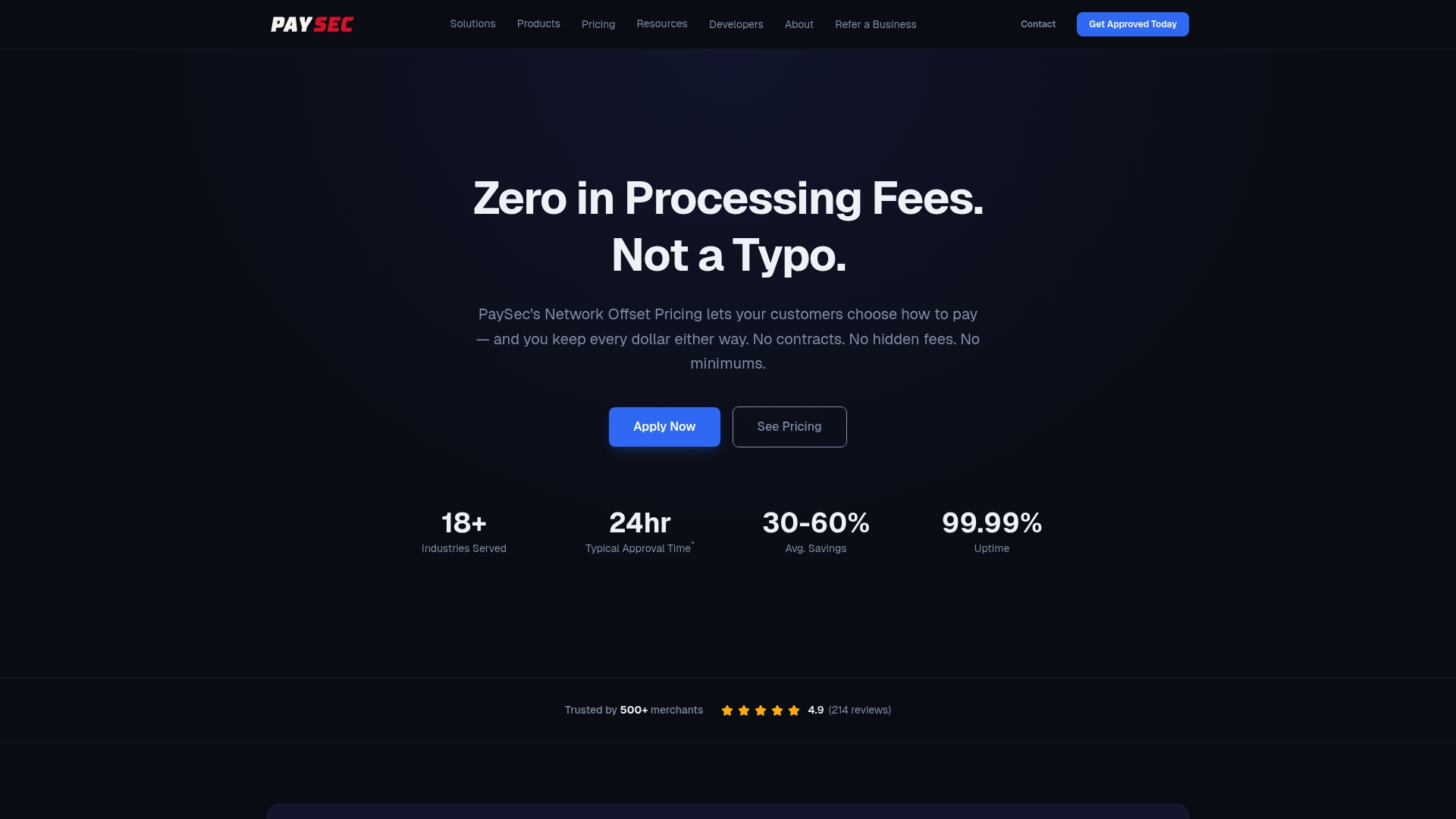
Comparing quotes means comparing structures, not just headline rates, and PaySec's Network Offset Pricing itemizes wholesale interchange instead of folding it into a flat markup. That transparency, paired with no long-term contracts and dedicated support across high-risk verticals, gives finance teams a clearer basis for renegotiation with any provider.
- Review the pricing options across Network Offset, Flat Rate, and Custom Enterprise.
- See how the network-offset model works and what it typically saves.
- Explore merchant services built for high-risk industries.
Request a quote today to explore transparent alternative pricing options.
Sources
- Merchant Processing (FDIC) — Risk Management Examination Manual, chapter excerpt
- High-Risk Merchant Processing: The Complete 2026 Guide (Chargebacks911)
- Comptroller's Handbook: Merchant Processing (OCC)
FAQ
How much does a high risk merchant account cost?
Costs vary by provider and industry, but high-risk accounts typically run 1 to 3 percentage points above standard rates, per Chargebacks911. Add setup fees of $100 to $500, chargeback fees of $25 to $100, and a rolling reserve, and the effective cost often lands in the mid-single digits. PaySec's own pricing is available on request through its pricing page.
Can merchants charge a 2% surcharge on credit card payments?
Surcharge rules vary by card network and by state, and any cap or prohibition depends on where the business operates. Merchants should confirm current network rules and state law directly with their processor or a compliance professional before adding a surcharge.
What are some examples of high-risk POS merchants?
Common examples include CBD retail, travel and subscription services, and businesses with high average tickets or frequent refunds. These verticals draw closer underwriting attention because their historical chargeback and dispute patterns run higher than standard retail.
What is a high risk merchant?
A high-risk merchant is a business that acquirers classify as carrying elevated chargeback, fraud, or regulatory exposure, often based on industry, average ticket size, or processing history. That classification typically means higher discount rates, added reserves, and closer monitoring under programs like Visa's VAMP.