

Finding payment processing software with transparent pricing and stable merchant accounts is difficult for businesses in regulated or high-risk verticals. Most alternatives rely on flat-rate fees and shared merchant accounts, which raise costs and increase the risk of sudden account freezes. This comparison shows pricing models, onboarding speed, and account stability across top platforms so companies can match one to their operational needs.
Table of Contents
PaySec
At a Glance
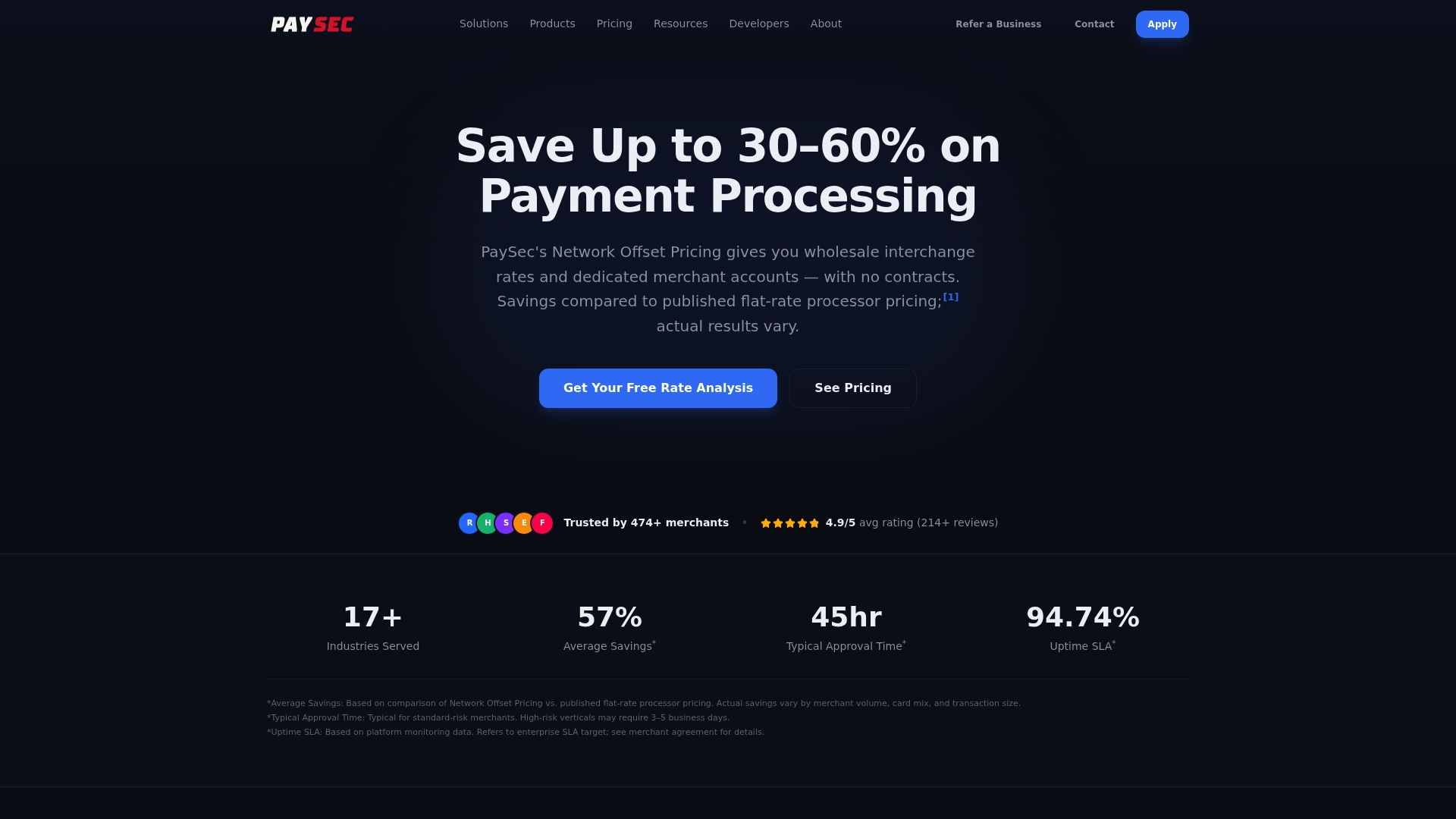
PaySec reports merchants see 30–60% savings on processing, and the vendor advertises a 42% reduction in processing costs for some clients. The platform uses Network Offset Pricing to pass wholesale interchange rates plus a small fixed margin. Fast approvals and dedicated merchant accounts aim to reduce account instability for businesses in regulated and high-risk verticals.
Core Features
PaySec combines Network Offset Pricing with dedicated merchant accounts, PCI DSS compliance, and SOC 2 certification for payment processing. AI-assisted onboarding and underwriting shorten approval cycles for standard-risk merchants, and the dashboard offers real-time reporting and transaction analytics. Integrations include eCommerce, POS, and accounting platforms with API access for custom gateway work.
Key Differentiator
The standout capability is passing wholesale interchange rates with a transparent fixed markup while issuing dedicated merchant accounts to clients. That pricing model keeps fees tied to actual card costs rather than a flat rate, and the dedicated accounts reduce shared-account risk. AI automation for underwriting reduces manual review steps and speeds merchant activation for standard-risk profiles.
Pros
PaySec reports significant savings versus flat-rate processors, which helps margins for merchants with varied card mixes. Dedicated merchant accounts reduce the likelihood of freezes and holds and improve long-term account stability. Transparent, line-by-line fee disclosure and experienced account managers give clearer monthly reconciliation and fewer surprise charges.
Cons
- Approval times for high-risk verticals can extend to 3–5 business days, requiring extra lead time for onboarding.
Notable Integrations
PaySec connects to a broad set of commerce and accounting platforms used by merchants:
- QuickBooks
- Shopify
- Xero
- WooCommerce
- Salesforce
- Toast POS
- Lightspeed
- Revel Systems
Who It's For
Small to mid-size merchants that want transparent, volume-sensitive payment pricing and a stable merchant account fit best with PaySec. Companies in regulated industries such as healthcare, CBD retail, and other high-risk verticals will benefit from tailored underwriting and compliance support. eCommerce and retail teams needing direct integrations with Shopify or POS systems will also find the platform appropriate.
Unique Value Proposition
Network Offset Pricing passing wholesale interchange plus a fixed margin lets merchants retain more revenue on each transaction. That structure makes fee line items auditable and simplifies comparisons against legacy flat-rate processors. For merchants handling B2B transactions or high-ticket payments, this model can change month-to-month cost predictability and free cash for operational needs.
Real World Use Case
A multi-location retailer processing $100K per month used PaySec to lower effective processing costs and stabilize its merchant account. The retailer gained live transaction visibility and reduced chargeback disruption with a dedicated account. That level of oversight improved monthly close accuracy and cash flow forecasting.
Pricing
Pricing follows Network Offset Pricing: wholesale interchange rates plus a small fixed markup rather than standard flat fees. Actual costs vary by merchant volume, card mix, and vertical risk profile. PaySec does not publish a single flat rate for all merchants.
Website: https://paysec.ai
JFrog
At a Glance
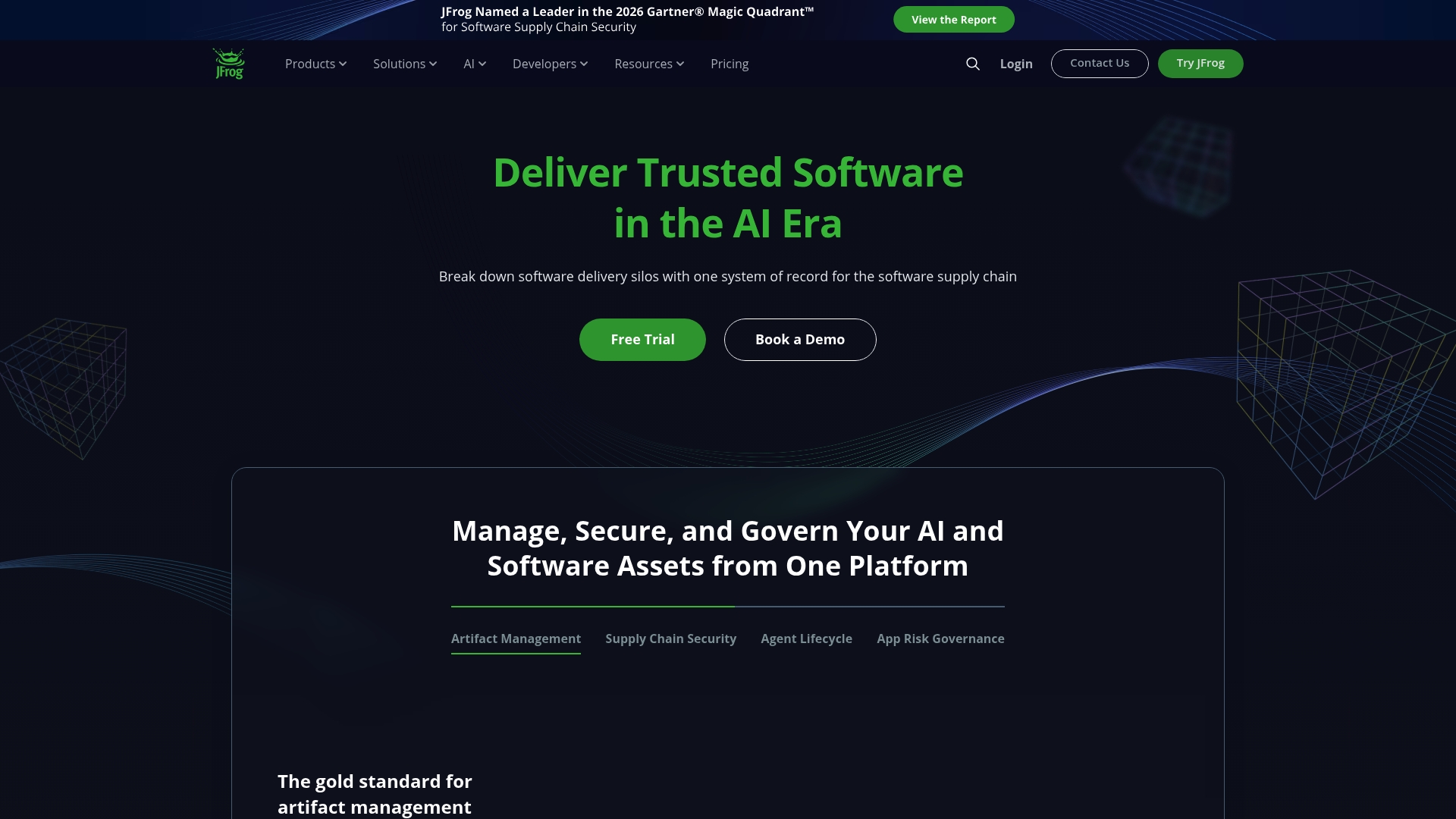
JFrog reports it is trusted by over 7,200 companies, including Fortune 500 firms. The platform centers on binary level management to give traceability from build to deployment. It also handles artifacts, containers, and AI models across multi cloud and on prem environments.
Core Features
JFrog delivers artifact management and repository services with support for many package types and file formats, and it integrates vulnerability scanning to catch issues earlier in the pipeline. The platform also includes distribution controls for secure deployment across environments and tools for AI model governance. Agent lifecycle governance and automation features link release activities to security and compliance checks.
Key Differentiator
The key differentiator is end to end visibility and security achieved through binary level management across all development stages and environments. That approach gives precise traceability for each build artifact and model. Teams can map a deployed binary back to its source, scans, and distribution history.
Pros
That figure above reflects broad enterprise adoption and helps explain why the platform provides extensive integrations and industry specific solutions. JFrog embeds security across the pipeline, from repository to distribution, and its tooling supports DevOps, DevSecOps, and MLOps teams. The product has recognition in industry reports such as Gartner’s Magic Quadrant, which underscores its focus on supply chain security.
Cons
- Complex onboarding for new teams. The breadth of functionality raises initial setup and configuration effort.
- Pricing pressure for small organizations. Costs can be high compared with simpler artifact hosts.
- Noticeable learning curve reported in third party reviews. Full platform use requires training and process changes.
When It May Not Fit
Small teams that need a lightweight package host will likely find JFrog excessive for basic needs. Organizations with limited DevOps maturity may struggle to realize the platform's full value quickly. Startups or single project teams with tight budgets could prefer a lower cost, simpler registry.
Notable Integrations
- ServiceNow
- GitHub
- NVIDIA
- Docker
- Maven
Who It's For
Large enterprises and mid sized organizations that require unified artifact, security, and deployment management will find the platform aligned to their needs. Teams operating across multi cloud and hybrid environments will benefit from the visibility and governance controls. DevSecOps and MLOps groups that need binary traceability and model governance are a strong fit.
Real World Use Case
A multinational corporation uses JFrog to automate artifact lifecycle across teams and regions. The company applies security policies at the repository and distribution stages to reduce exposure. It also deploys and govern AI models centrally while keeping traceability for audits and rollbacks.
Pricing
Not applicable — informational only. The product data does not list public pricing tiers or a starting figure. Organizations should contact JFrog sales or consult the website for licensing and deployment options.
Website: https://jfrog.com
Sonatype
At a Glance
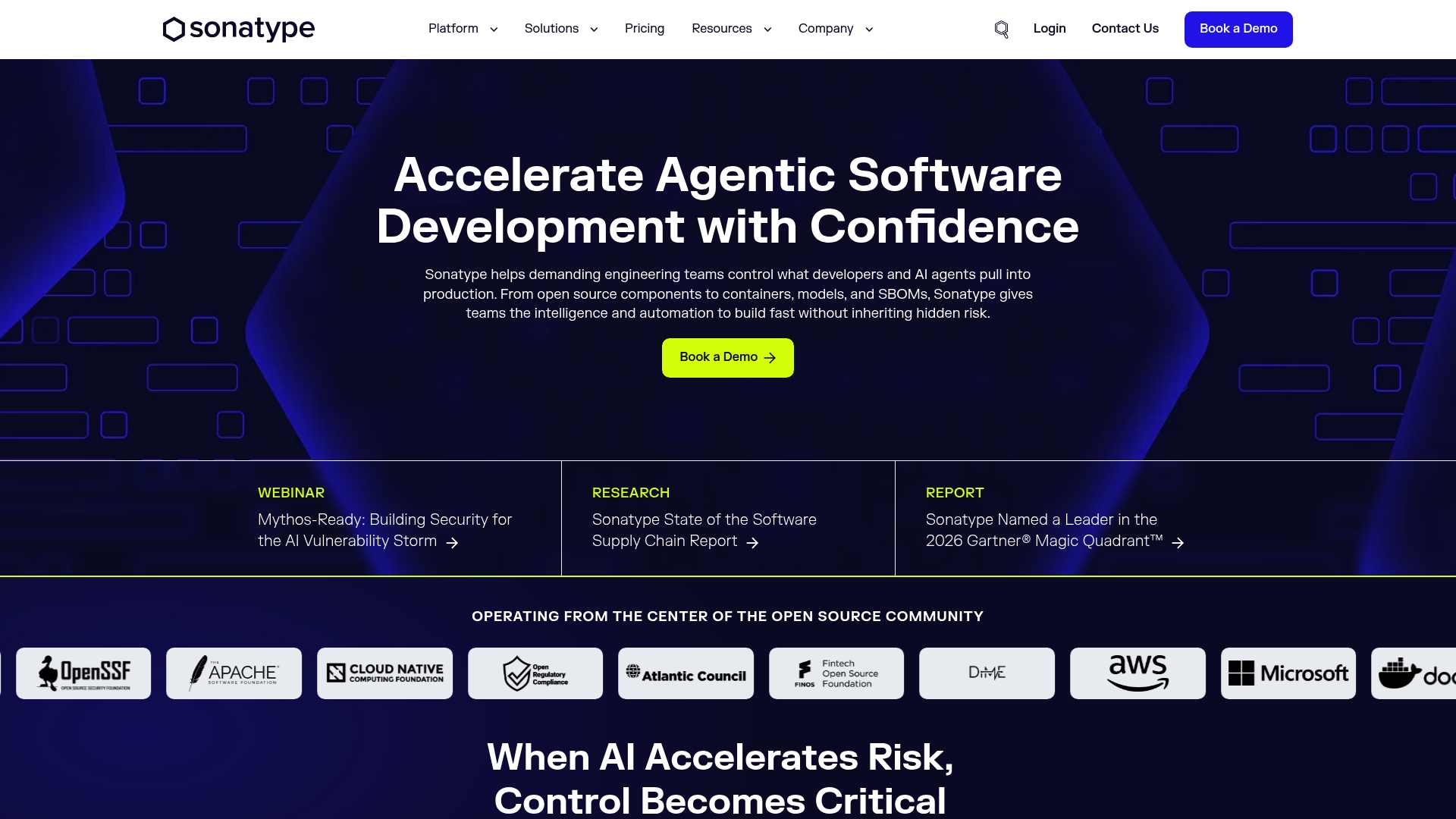
Sonatype reports recognition as a leader in Gartner's Magic Quadrant for 2026. The vendor advertises support across more than 50 languages and developer tools. That combination targets teams that must manage open source risk while keeping fast release cadence.
Core Features
Sonatype centers on component and dependency control with a private artifact store and policy gates for CI pipelines. The platform links repository management, automated vulnerability checks, and license scanning so teams catch issues before release. Featured products include Nexus Repository, Firewall, and an SBOM tool set that work together across formats and languages.
Key Differentiator
Sonatype pulls telemetry from the open source ecosystem and Maven Central to inform blocking and remediation decisions. That real-time feed ties repository metadata to security policies and reduces the time between detection and action. Teams get contextual evidence about which component versions carry risk.
Pros
The product has a clear focus on open source security and dependency hygiene, which helps reduce supply chain exposure in builds and containers. Wide integrations with CI and source control let you apply policy checks inside Jenkins, GitHub Actions, GitLab pipelines, and Azure DevOps. Sonatype reports leadership recognition, and the platform is designed to support AI and ML development pipelines alongside traditional software projects.
Cons
- Pricing is enterprise oriented and may be high for smaller organizations.
- The platform has depth and complexity that requires learning or dedicated DevSecOps time.
- Public documentation gives limited detail about specific AI features, which can leave AI teams with open questions.
When It May Not Fit
Small teams or solo developers who need a lightweight package proxy will find the cost and operational overhead unfavorable. Organizations without a DevSecOps role will struggle to configure fine grained policies and remediation workflows. Projects that need detailed public documentation on AI integrations may need to clarify features with Sonatype sales first.
Notable Integrations
- Jenkins
- GitHub
- GitLab
- Azure DevOps
- Nexus Repository
- Sonatype Firewall
- Gradle
- Maven
Who It's For
DevSecOps teams, open source managers, and security engineers working at companies that build at scale. Teams that run CI pipelines and need centralized control of artifacts and policy enforcement will benefit most. Organizations that require license tracking and SBOM generation for compliance also match this product profile.
Real World Use Case
A mid sized software company installs Nexus Repository to centralize artifacts across teams and CI systems. Pipeline hooks block builds that introduce known vulnerable component versions. Over time, security and release engineers reduce hotfix cycles by catching problematic dependencies earlier.
Pricing
Starting at $1,200/year for Guide, $1,620/year for Nexus Repository, $4,800/year for Firewall, and custom pricing for Lifecycle and SBOM Manager. Enterprise bundles and support options are available through Sonatype sales.
Website: https://sonatype.com
Payment Processing Software Comparison
Choosing the right payment processing software is crucial for businesses to optimize transaction efficiency and manage costs effectively.
| Product | Key Differentiator | Best For | Pricing | Notable Limitation |
|---|---|---|---|---|
| Paysec | Transparent interchange-based pricing model | Regulated high-risk merchants | Price not published | Longer approval times for high-risk verticals |
| JFrog | Binary-level artifact traceability | Large enterprises | Price not published | Requires significant setup effort |
| Sonatype | Open source risk management with real-time telemetry | DevSecOps and compliance teams | Starts at $1,200/year | High entry cost for smaller organizations |
Challenges With crates.io Alternatives and Payment Processing Costs
When exploring crates.io alternatives, teams often seek solutions that improve financial transparency while reducing operational costs. Many businesses face high, unpredictable transaction fees that reduce revenue and complicate budgeting. Paysec addresses this issue directly with its Network Offset Pricing model. Merchants see 30 to 60 percent savings by paying wholesale interchange rates plus a small fixed margin. This approach eliminates hidden fees and supports industries like SaaS, healthcare, and eCommerce with stable, dedicated merchant accounts.
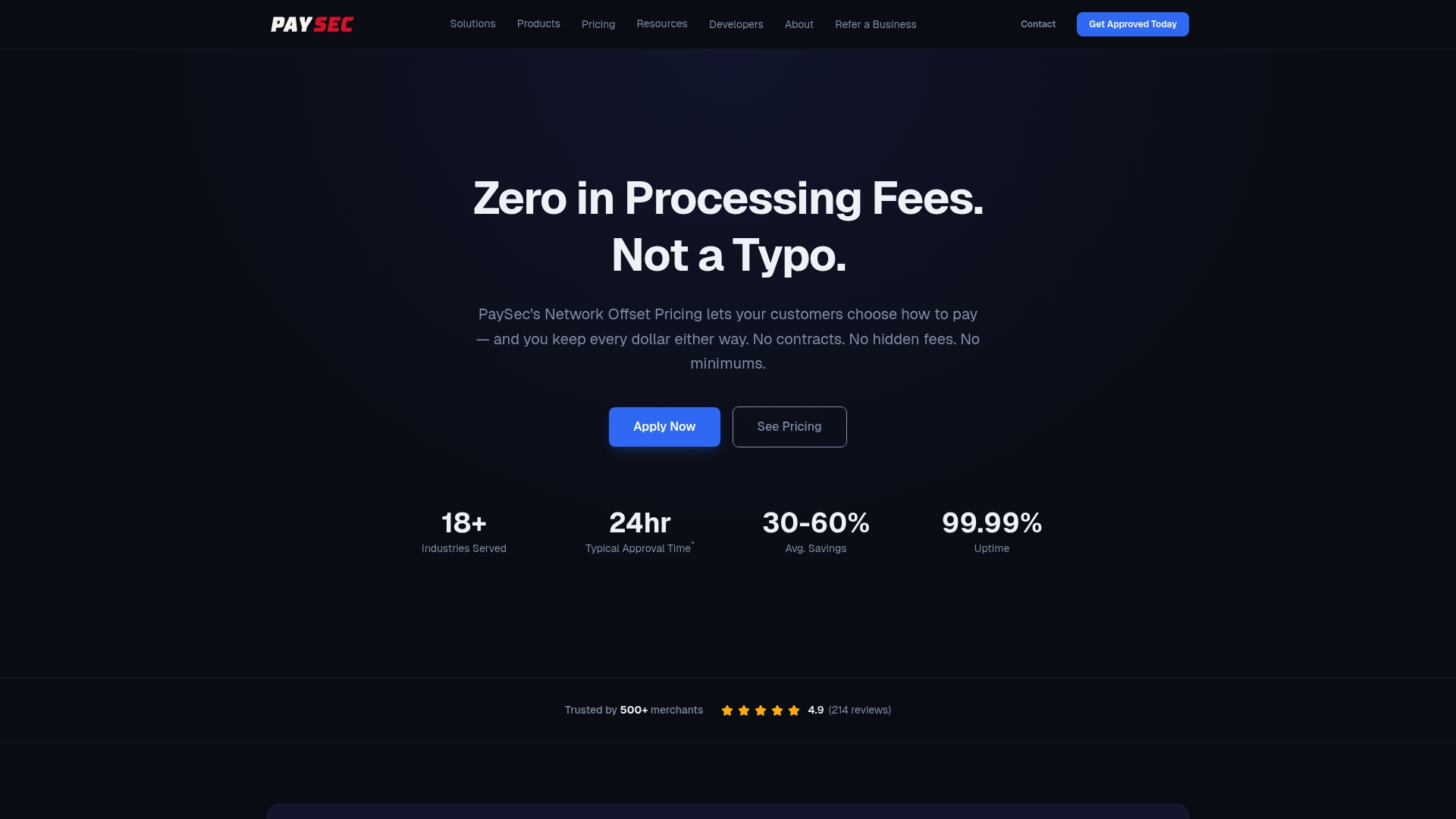
Explore how Paysec allows merchants to retain more revenue per transaction with transparent pricing and detailed reporting. Visit Paysec to learn about measurable savings and compliance support designed for regulated and high-risk verticals. Make smarter payment processing decisions and get live transaction visibility tailored to your business needs.
FAQ
What savings can merchants expect when using Paysec?
Paysec reports merchants can see savings of 30–60% on processing costs. This comes from their use of Network Offset Pricing, which allows businesses to pass wholesale interchange rates plus a small fixed margin. Merchants should anticipate significant reductions in their processing expenses compared to flat-rate processors.
How does Paysec compare to JFrog in terms of integration capabilities?
JFrog excels in providing extensive integrations with development tools suitable for artifact management, such as Jenkins and GitHub. In contrast, Paysec focuses on seamless integrations with eCommerce and accounting platforms like Shopify and QuickBooks. Businesses looking for dedicated payment processing solutions will find Paysec more aligned with their needs than JFrog.
What role does AI play in the onboarding process for Paysec?
Paysec incorporates AI-assisted onboarding to expedite the approval cycles for standard-risk merchants. This feature helps shorten the time it takes to activate accounts, making it easier for businesses to get started with the platform quickly. This capability is especially beneficial for small to mid-size merchants who want a smooth entry into payment processing.
Which platforms does Paysec integrate with for payment processing?
Paysec connects with various platforms such as Shopify, QuickBooks, and WooCommerce, enhancing its usability for eCommerce and retail teams. This integration capability allows merchants to manage transactions efficiently without the need for extensive technical setup. Companies looking for scalable integration options should consider Paysec.
What is the approval time for high-risk verticals with Paysec?
The approval times for high-risk verticals with Paysec can extend to 3–5 business days. Businesses in these sectors should prepare for this timeline to ensure a smooth onboarding process. This waiting period reflects Paysec's commitment to thorough underwriting and compliance support.