

Paying more than expected in processing fees or dealing with unpredictable margins creates real friction for businesses that need reliable payment processing software. Many providers hide key costs in bundled rates or require long-term contracts and monthly minimums, making it hard for seasonal merchants or those seeking cost transparency. This comparison covers the most transparent, integration-friendly alternatives so you can choose a payment processing service that fits your service model and growth needs.
Table of Contents
- PaySec
- Kudocs
- Get information about a company (GOV.UK)
- Comparative Analysis of Payment Processing Software Options
PaySec
At a Glance
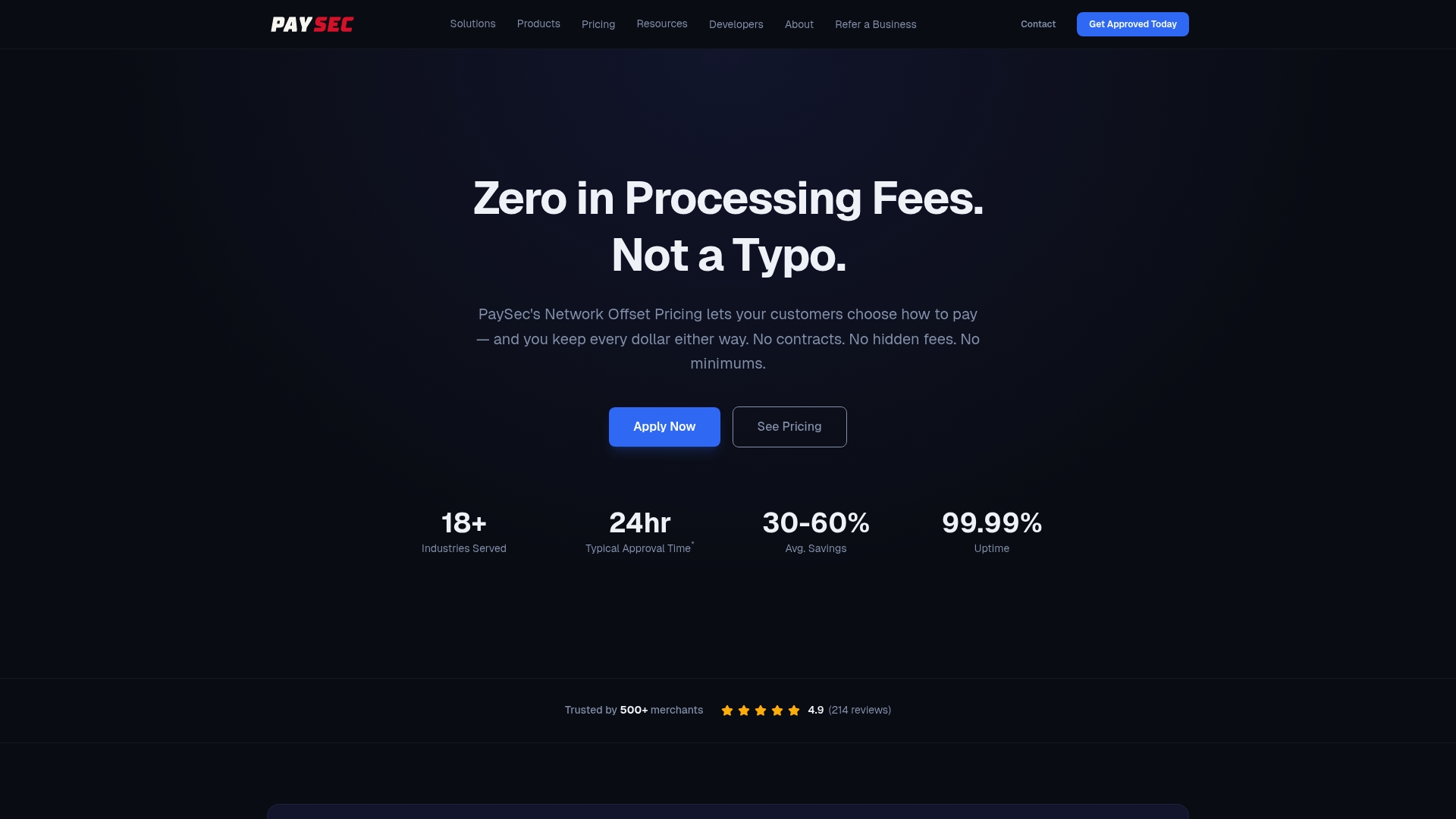
According to the company, merchants report 30–60% savings on processing fees, with case examples citing reductions of about 40% and 42% in customer stories. That claim positions cost savings as the single most tangible benefit.
PaySec pairs that claim with a named approach called Network Offset Pricing, which the vendor describes as wholesale interchange plus a transparent fixed margin, no monthly minimums, and no long-term contracts.
Core Features
- Network Offset Pricing for transparent rates and merchant-first margins.
- Multiple payment channels: in-store terminals, online gateways, and mobile processing for counter and remote sales.
- Dedicated merchant accounts and direct support focused on onboarding and dispute handling.
- Automation for onboarding, reconciliation, and chargeback management to reduce manual reconciliation work.
- Advanced security including end-to-end encryption and PCI compliance plus SOC 2 level controls reported by the vendor.
Key Differentiator
The single structural difference is the Network Offset Pricing model. That method converts interchange costs into a wholesale interchange component plus a visible fixed fee. The result is predictable per-transaction math rather than opaque blended rates.
Pros
- Clear pricing posture. Merchants see itemized interchange plus a fixed margin rather than bundled blended rates so fee drivers are visible.
- The vendor advertises fast approval times, typically 24–48 hours, which speeds onboarding for merchants replacing legacy processors.
- Strong security posture with PCI DSS and SOC 2 referenced in the product materials, useful for regulated practices and healthcare.
- Broad integration set. Native connectors cover common eCommerce platforms and POS systems used by restaurant and retail operators.
- No monthly minimums and no early termination fees reported by the company, which reduces the financing risk for seasonal merchants.
Cons
- Requires technical setup for API integrations, so smaller teams without developer resources will need either vendor support or a third party to complete advanced integrations.
Notable Integrations
- Shopify
- WooCommerce
- Magento
- BigCommerce
- Wix
- Clover POS
- Square API
- Lightspeed
Who It's For
Small to mid-size merchants and high-risk businesses that run volume and want transparent, interchange-based economics. Suited to restaurants, eCommerce merchants, healthcare practices, and CBD retailers that need clearer reconciliation and dedicated support.
Unique Value Proposition
Network Offset Pricing makes interchange a visible line item and fixes the processor margin. For merchants that track cost per sale, that converts variable interchange swings into predictable margins and makes month-to-month savings measurable on transaction reports.
Real World Use Case
A regional restaurant chain in the vendor materials is described as reducing processing costs by about 40 percent while consolidating in-store and online reporting and receiving dedicated merchant support. That 40 percent figure above is a vendor-reported example of the expected outcome.
Pricing
Pricing follows the Network Offset Pricing model: wholesale interchange plus a transparent fixed margin. The company states there are no monthly minimums and no early termination fees. Detailed pricing requires a quote tailored to volume and processing mix.
Website: https://paysec.ai
Kudocs
At a Glance
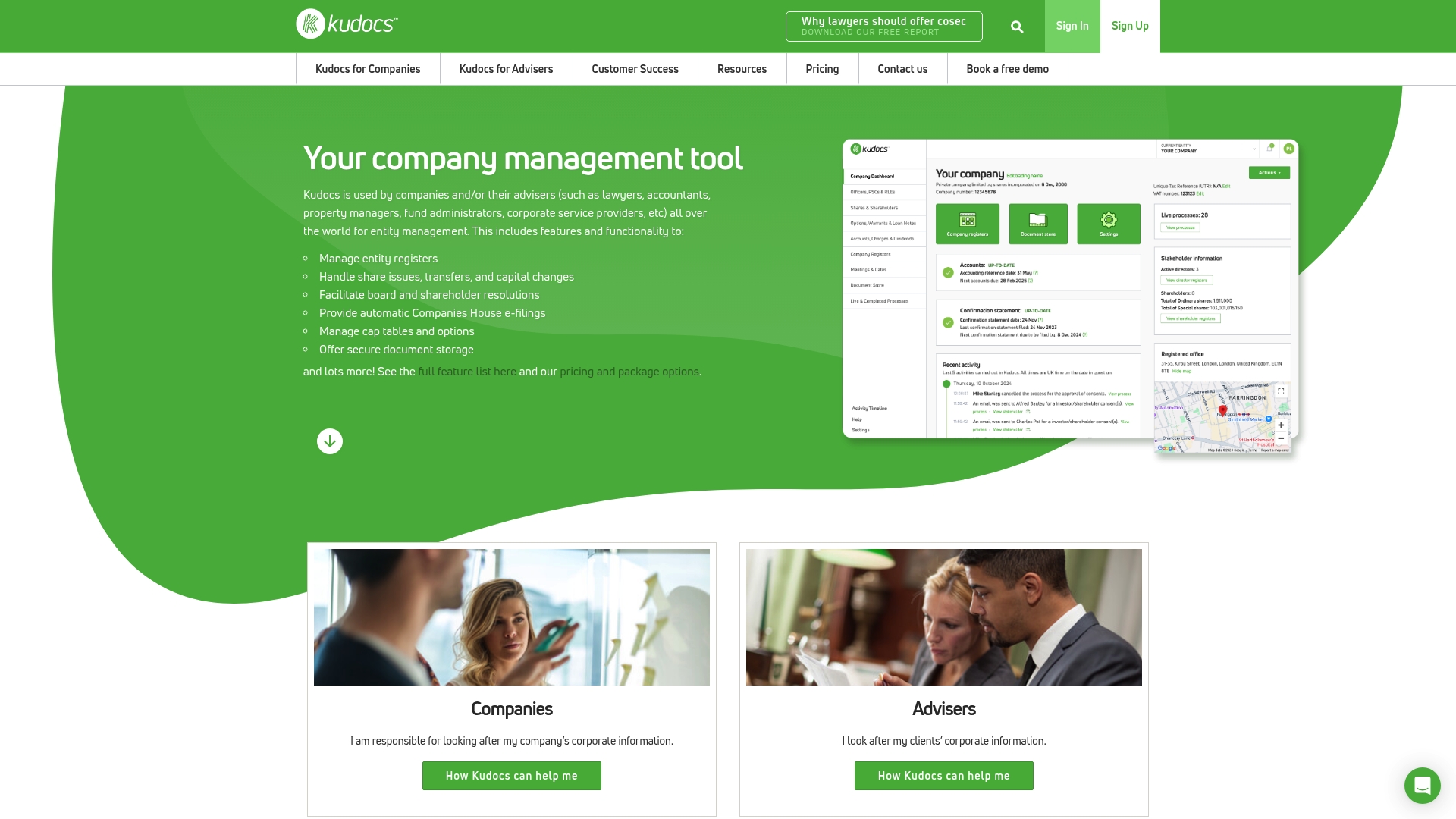
Integrates directly with Companies House for real-time filings and updates, so the platform can submit e-filings from the interface rather than forcing manual uploads. That direct connection is the clearest operational advantage Kudocs advertises for corporate secretarial teams.
Core Features
- automatic Companies House e-filings for common filings including director and officer changes and annual confirmations.
- Manage entity registers with structured records for directors, secretaries, and registered addresses.
- cap table management that tracks share issues, transfers, and capital changes across multiple entities.
- Facilitate board and shareholder resolutions with templated minutes and audit trails.
- secure document storage for constitutional paperwork, share certificates, and meeting packs.
Key Differentiator
The vendor advertises direct integration with Companies House that keeps corporate records and filings in sync. That integration reduces the manual step of exporting and reformatting filings and makes transaction workflows faster for teams that file frequently.
Pros
-
Streamlines routine secretarial work, so admin tasks like filing confirmations or recording transfers take fewer clicks and less copy paste.
-
The audit trail and templated resolutions improve record keeping and help with internal reviews and external audits.
-
Collaboration support lets multiple advisors and in-house users work on the same entity without email chains or siloed documents.
-
The interface is described as user friendly for both legal professionals and company owners, which lowers the training time for junior staff.
-
Automating repetitive filings reduces time spent on compliance and frees senior staff for advisory work.
Cons
-
No independent third-party reviews are listed on major sites such as G2, Capterra, or Trustpilot, which makes public sentiment hard to verify.
-
Limited public information about edge-case behavior or performance limits means you may need a trial to test large portfolios and complex capital structures.
-
The vendor documentation is the primary source for feature claims, so real-world scaling and support response times are not externally validated.
Who It's For
Legal, accounting, and corporate advisory firms that manage company secretarial work for many client entities. It also suits corporate service providers and property managers who need a central place to maintain registers and file routine documents.
Real World Use Case
A law firm moves recurring client filings into Kudocs to automate director changes and shareholder resolutions. The team uses templated minutes, stores signed documents in the entity folder, and lets a senior solicitor review the audit trail rather than recreate records each quarter.
Pricing
Kudocs does not publish pricing in the supplied data; the product entry is informational only. Contact the vendor directly for current plans, seat models, and any volume discounts for multi-client or firm-wide licenses.
Website: https://kudocs.co.uk
Get information about a company (GOV.UK)
At a Glance
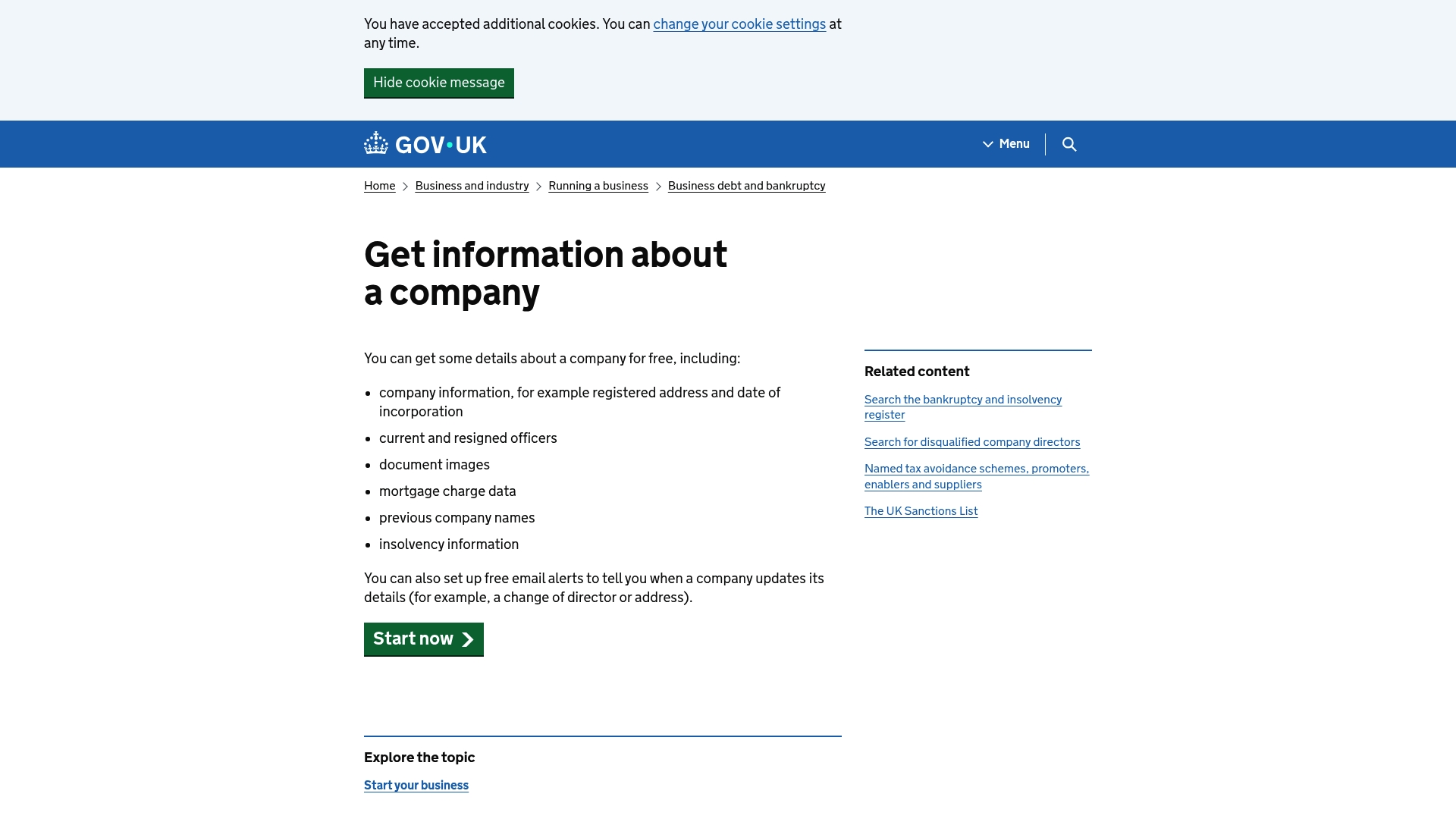
Provides free access to official company filings, including scanned document images, mortgage charges, previous company names, and insolvency records. The service also lets you set up email alerts for real-time changes to a company record.
The interface is widely criticized as confusing and the identity verification flow is reported as dysfunctional, yet this remains the primary official source for UK company data.
Core Features
The site publishes company registration details, current officers, and historical filings with scanned images for many documents. It exposes mortgage charge information and insolvency notices useful for compliance checks.
You can subscribe to email alerts for changes, search by company number or name, and access a history of previous names and filings. Support staff are available for specific queries.
Key Differentiator
The single most defining trait is that this is the official government source for UK company information. That status matters for legal, regulatory, and formal due diligence where citing an authoritative record is required.
Because it is the record holder, many downstream reports and legal checks point back to these filings rather than to third-party summaries.
Pros
-
Access to primary filings and scanned documents lets you verify signatures, resolutions, and mortgage entries against what was submitted to Companies House. This raw evidence matters for lawyers and compliance teams.
-
The service is free to use, which removes access cost from small firms and independent researchers performing background checks or pre-contract reviews.
-
Email alerts provide a simple way to monitor when officers change or when insolvency notices appear, reducing the need for manual rechecks.
-
The record-level detail supports legal and regulatory workflows where third-party summaries would not suffice, such as verifying director appointments or charge registrations.
Cons
-
The site navigation is confusing and the search experience can feel fragmented, which slows simple lookups for users who need quick answers.
-
The identity verification system is reported as dysfunctional by several users, creating delays when you need to access protected services or file applications.
-
Some support interactions are reported as unhelpful or unprofessional; escalations occasionally take longer than a commercial service would allow.
-
Public disclosure of officer names and addresses raises privacy concerns for individuals who expect limited exposure.
When It May Not Fit
If you need a polished, user-friendly lookup experience with integrated analytics and bulk-export workflows, this service is not optimized for that. It is designed as a legal record rather than a commercial research tool.
If you require obscured personal data or aggregated marketing-ready company profiles, look to specialist commercial providers instead.
Who It's For
Researchers, legal teams, journalists, and compliance officers who need authoritative UK company records and filed evidence. Ideal when you must cite the original filing or verify a legal status for contracts or regulatory checks.
Real World Use Case
A law firm preparing for a merger pulls current officers, reviewed scanned board resolutions, and mortgage entries to confirm clear title. The firm subscribes to email alerts so any post-signing insolvency action triggers a rapid follow-up.
Website: https://gov.uk/get-information-about-a-company
Comparative Analysis of Payment Processing Software Options
In this section, we provide an analytical comparison of PaySec and its alternatives to assist readers in choosing the payment processing software that best suits their business needs.
Pricing Transparency and Cost Control
PaySec’s standout pricing model, Network Offset Pricing, provides clear visibility into transaction costs by delineating interchange fees and fixed processor margins. This contrasts with many competitors' use of bundled rate models, which can obscure specific cost components. For businesses prioritizing cost predictability and analysis, this transparency provides a clear value.
Kudocs does not compete on pricing structure as it focuses on corporate documentation, not payment processing. The GOV.UK company information service, free of direct costs, doesn't operate as a payment processing service but provides a useful ancillary service for investigative purposes, lacking direct pricing relevance.
Integration and Feature Coverage
PaySec integrates with a host of widely-used platforms, such as Shopify and Magento, making it versatile for businesses operating across diverse system ecosystems. It also offers security—highlighted by PCI DSS and SOC 2 compliance—which is essential for handling sensitive payment data.
While Kudocs offers corporate register management and document filing features, it lacks the focus on payment ecosystem infrastructure. Similarly, GOV.UK provides in-depth company filing retrieval but does not extend functionality toward managing or accepting payments.
Best Fit
- PaySec: Ideal for businesses requiring multi-channel payment solutions and transparent, predictable cost structures, particularly in industries like retail, hospitality, and eCommerce.
- Kudocs: Suitable for legal or accounting professionals managing multiple entity records, prioritizing compliance documentation over transactional capabilities.
- GOV.UK Company Information Service: Best for legal and research teams needing access to authoritative company data at no cost, with a focus on records rather than integration or process control.
Our Pick
PaySec combines transparent pricing, extensive integrations, and process improvements, making it exceptional for merchants seeking efficient payment handling across channels. However, for companies that prioritize corporate compliance tools or primarily require in-depth regulatory filings, the other options might present better-focused alternatives in their respective domains.
Payment Processing Solutions Comparison
Identify the ideal platform based on pricing transparency, security features, and usability for your business.
| Product Name | Key Differentiator | Core Features | Pricing | Limitation |
|---|---|---|---|---|
| PaySec | Transparent Network Offset Pricing | Advanced security, diverse channels, dedicated accounts | Not disclosed | Requires technical setup for API integrations |
| Kudocs | Direct integration with Companies House | Automatic e-filings, cap table management, secure storage | Not disclosed | No independent third-party reviews |
| GOV.UK Company Info | Official UK company information source | Access to filings, email alerts for changes | Free | Confusing navigation and identity verification issues |
Discover Transparent Payment Solutions Beyond company-information.service.gov.uk Alternatives
When searching for company-information.service.gov.uk alternatives, you want clarity and control over your business finances. PaySec offers a powerful way to reduce hidden transaction costs with its Network Offset Pricing. This approach reveals wholesale interchange fees plus a fixed transparent margin so you experience predictable cost savings without surprises.
Take charge of your payment processing today with PaySec. Enjoy 30-60% savings in transaction fees, no long-term contracts, and detailed reporting that turns cost management into measurable results. Explore how PaySec supports eCommerce, restaurants, healthcare, and more by visiting PaySec and see how easy it is to import your transactions and track savings instantly.
Frequently Asked Questions
How does Paysec's pricing model compare to traditional payment processors?
Paysec utilizes Network Offset Pricing, which combines wholesale interchange rates plus a transparent fixed margin. This model allows merchants to clearly see itemized fees instead of blended rates, which can be opaque. Merchants can expect cost savings averaging 30–60% on processing fees compared to traditional processors.
Which unique feature does Paysec offer that may benefit eCommerce businesses?
Paysec provides dedicated merchant accounts and direct support, focusing on onboarding and dispute handling, which is crucial for eCommerce businesses. This dedication ensures smooth transitions and reliable support, especially for growing businesses in competitive markets.
What is a key advantage of using Paysec over other payment processing alternatives?
Paysec offers fast approval times, typically within 24–48 hours, making it easy for merchants to switch from legacy processors without prolonged downtime. This quick onboarding in comparison to some alternatives streamlines the process for businesses looking to enhance their payment processing capabilities.
Can Paysec support small and high-risk businesses effectively?
Yes, Paysec is well-suited for small to mid-size merchants and high-risk businesses, as it offers clear, interchange-based pricing that helps these companies manage their costs effectively. Moreover, the dedicated support ensures tailored assistance for businesses in sectors like healthcare and eCommerce.
What integration capabilities does Paysec provide for businesses?
Paysec integrates with popular eCommerce platforms such as Shopify, WooCommerce, and Magento, allowing businesses to easily adopt their payment processing solution. This broad integration set makes it a practical choice for retail operators and eCommerce merchants looking to optimize their operations.