

In most standard payment setups, the answer is no. Your payment processor holds the regulatory burden, not you. FinCEN's administrative rulings confirm that a processor acting as an agent of the payee, accepting and transmitting funds solely to execute a sale, is generally not a money transmitter under Bank Secrecy Act rules. That means the money transmitter license requirement falls on the processor, provided the flow is structured correctly.
Before you sign with any processor, verify these trust signals immediately:
- FinCEN registration (or confirmed MSB status where applicable)
- PCI DSS Level 1 certification
- SOC 2 compliance
- Confirmed acquiring bank sponsorship
Four scenarios flip this answer and put licensing risk on your side:
- Your business holds or pools customer funds before disbursing them
- You act as a principal in the transaction rather than as a seller receiving payment
- You run a marketplace that controls the timing or settlement of third-party seller payouts
- You issue stored-value instruments, gift cards, or redeemable balances you custodize
If none of those apply, your focus should be on vetting your processor, not filing for a license.
Key Takeaways
In most merchant payment models, the processor holds the money transmitter license obligation, not the merchant, provided the processor uses bank-sponsored rails and the agent-of-payee structure.
| Point | Details |
|---|---|
| Merchants rarely need a license | FinCEN's agent-of-payee ruling keeps standard merchant payment flows outside money transmitter scope. |
| Control of funds is the trigger | Custody, pooled wallets, or platform-controlled disbursement timing converts a business into a transmitter. |
| Verify four processor proofs | Confirm FinCEN registration, PCI DSS Level 1, SOC 2, and acquiring bank sponsorship before signing. |
| Document and govern flow changes | Any new wallet, delayed settlement, or third-party payout feature requires a fresh license-trigger review. |
| Paysec handles the burden | Paysec's bank-sponsored, agent-of-payee model with PCI DSS Level 1 and SOC 2 keeps merchants out of transmitter scope. |
Table of Contents
- When does a money transmitter license apply to your business?
- How do legitimate processors keep merchants out of licensing scope?
- What should you verify before signing with a processor?
- What happens when a flow is misclassified?
- How Paysec handles licensing risk so merchants can focus on business
- Paysec takes the compliance burden off your plate
- Sources
- FAQ
When does a money transmitter license apply to your business?
The federal and state test is not about what you call yourself. It centers on control: does your business accept, hold, pool, or transmit funds on behalf of others? Or does it simply instruct a bank to move money from a buyer to you, the seller?
FinCEN's facts-and-circumstances framework draws this line clearly. A business that transmits funds on behalf of payers, rather than operating as a merchant receiving payment for goods or services, crosses into money service business territory. The moment a platform takes custody of funds and decides when and how to release them, the analysis changes.
Concrete triggers that convert a merchant or platform into a money transmitter:
- Custodial wallets or pooled float: Funds sit in an account the platform controls before being released to sellers or users.
- Acting as principal: The business receives funds in its own name and re-transmits them, rather than acting as an agent of the payee.
- Marketplace disbursements with platform-controlled timing: A platform collects buyer payments, holds seller balances for days, and disburses on its own schedule.
- Stored-value or gift-card custodial models: The business issues and custodizes redeemable balances, not just processes card transactions.
The contrast is straightforward. A restaurant using a processor to accept card payments settles directly to its bank account. That is not transmission. A platform that collects payments from buyers, holds seller balances for a week, and disburses on a rolling schedule controls those funds. That likely is transmission, regardless of what the contract says.
Practitioner analysis from Astraea Counsel frames the control test as the single most important question: does the platform have custody or control of customer funds? A non-custodial software conduit that routes instructions to a bank typically falls outside the definition. A platform with a pooled wallet does not.
State licensing adds another layer. Unlike the EU's passporting regime, the U.S. has no federal money transmitter license. Each state has its own application, surety bond requirement, and renewal process. Industry analysis describes state licensing as costly and time-consuming, making it a processor-level strategic investment rather than something a typical merchant should absorb.
| Business model | Likely transmitter status | Why |
|---|---|---|
| Merchant accepting card/ACH via processor | Not a transmitter | Processor is agent of payee; funds settle to merchant bank |
| Marketplace holding seller balances | Likely a transmitter | Platform controls timing and custody of third-party funds |
| SaaS platform with custodial wallets | Likely a transmitter | Pooled float under platform control |
| Gift-card issuer (custodial) | Likely a transmitter | Stored-value custody triggers state licensing in most states |
| Merchant using processor with bank sponsorship | Not a transmitter | Bank rails and agent-of-payee structure keep merchant outside scope |
How do legitimate processors keep merchants out of licensing scope?
The structure that protects merchants is called the agent-of-payee model. The processor operates under a contractual agreement with the merchant, accepts funds on the merchant's behalf, and uses bank rails (card networks or ACH) to settle directly to the merchant's bank account. No pooled custody. No float held by the processor on behalf of the merchant's customers.
Venable's legal analysis confirms that regulatory obligations fall on the processing entity based on its structure, while merchants using a properly structured processor are typically protected by the agent-of-payee exemption.
The practical flow looks like this: card or ACH transaction → card network or ACH rail → acquiring bank → settlement to merchant bank account. The acquiring bank is the licensed, regulated entity. The processor operates under the bank's sponsorship. The merchant receives funds in its own account, usually within one to two business days, with no intermediate custody by the processor.
Key design elements that preserve this structure:
- Settlement goes directly to the merchant's bank account, not to a processor-held pool
- The processor's acquiring bank relationship is documented and active
- Refunds and chargebacks are handled through the same bank rails, not through a processor-controlled float
- The processor maintains a BSA/AML program and FinCEN registration where required
The OCC Comptroller's Handbook on Merchant Processing describes the roles of acquiring banks and third-party organizations in detail, noting that banks must understand their potential liability when sponsoring processors. That bank-side accountability is what anchors the merchant's protection.
FFIEC BSA/AML guidance adds that banks are expected to perform due diligence on processors, verify merchant identities, and monitor for AML risk. A processor that cannot demonstrate these controls to its acquiring bank is a red flag for merchants, not just for regulators.
For merchants in higher-risk verticals such as CBD, healthcare, or high-ticket eCommerce, bank underwriting scrutiny is higher. Confirming that your processor has a stable acquiring bank relationship and a documented underwriting process is especially important in those categories.

What should you verify before signing with a processor?
Due diligence here is not optional. Run through this checklist before committing to any processor.
- Ask who holds funds and when. Does the processor ever pool or hold customer funds before settling to your account? Get the answer in writing.
- Request proof of FinCEN registration (or MSB status documentation) and a description of the processor's BSA/AML program.
- Verify PCI DSS Level 1 certification. Ask for the Attestation of Compliance, not just a checkbox on a sales deck. Review the PCI compliance checklist to understand what Level 1 actually covers.
- Request the SOC 2 report. A Type II report covering security and availability is the standard to ask for.
- Confirm the acquiring bank sponsor. Ask for the name of the sponsoring bank and verify the relationship is current.
- Review settlement timing. Standard is one to two business days to your bank account. Longer float periods warrant scrutiny.
- Check contractual protections: funds segregation language, indemnities for regulatory misclassification, audit and reporting rights, and termination/transition support if the processor exits the relationship.
- Confirm chargeback and refund handling runs through bank rails, not a processor-held reserve that could constitute custody.
- Review merchant underwriting criteria. Understanding how the processor assesses payment processor risk appetite tells you whether your vertical is fully supported.
Pro Tip: Request a one-page written diagram of the exact money flow from buyer payment to your bank account, plus a written attestation confirming the processor never pools or holds your customers' funds. Any processor confident in its structure will provide both without hesitation.
For payment processing compliance context, a processor's certifications and operational controls are the merchant's primary shield against regulatory exposure.
What happens when a flow is misclassified?
Getting this wrong carries real consequences. State regulators can issue cease-and-desist orders, assess retroactive fines, and require immediate licensing. Acquiring banks may freeze or terminate merchant accounts if they discover the merchant is operating outside its approved model. Contract disputes can follow, especially if indemnity language is absent.
Practical mitigation steps:
- Document your payment flow in writing before launch, not after a regulator asks.
- If facts are close (marketplace-with-float, delayed disbursements, custodial wallets), get a written regulatory opinion or a vendor attestation before going live.
- Insist on contractual indemnities that allocate misclassification risk to the processor, not to you.
- Preserve reconciliation records and audit trails. Regulators and acquiring banks both ask for these during reviews.
- If your product holds or controls funds in any way, consult payments counsel before scaling that feature.
Pro Tip: Build a "flow-change" governance step into your product roadmap. Any time a new feature introduces a wallet, delayed settlement, or third-party disbursement, rerun the license-trigger checklist before the feature ships.
For marketplace operators, the marketplace payment compliance guide covers multi-party payout structures and the specific triggers that create transmitter exposure in platform models.
How Paysec handles licensing risk so merchants can focus on business
Paysec is built around the agent-of-payee model. Funds settle directly to merchant bank accounts. No pooled custody. No float held on behalf of merchant customers. The acquiring bank relationship is active and documented, and Paysec's BSA/AML controls operate on the processor side, not the merchant's.
Specific protections Paysec provides:
- PCI DSS Level 1 certification and PCI compliance assistance included in the merchant relationship
- SOC 2 compliance covering security and availability controls
- Bank sponsorship through established acquiring bank relationships
- Real-time transaction reporting via payment reporting dashboards for full reconciliation visibility
- BSA/AML controls integrated on the processor side
- Transparent funds-flow documentation available to merchants on request
Paysec serves merchants across SaaS, restaurants, eCommerce, healthcare, CBD, and high-risk retail, with no long-term contracts and no hidden fees. Merchants in those verticals benefit from dedicated merchant accounts, clear settlement timing, and the contractual protections that keep licensing risk where it belongs: on the processor.
During onboarding, request the funds-flow diagram, the written attestation on custody, the acquiring bank sponsor name, and copies of the PCI DSS and SOC 2 reports. Paysec makes all of these available.
The merchant's real priority is processor selection, not self-licensing
Merchants using a compliant, bank-sponsored processor rarely need a money transmitter license. The regulatory burden sits with the processor by design. Spending time on self-licensing when the facts don't require it is a distraction. The faster path to compliance is selecting a processor that documents its flow, holds the right certifications, and backs its structure with contractual indemnities.
Document your flow. Ask who holds funds, who controls settlement, and what the contract says about liability. Then request proof.
Paysec takes the compliance burden off your plate
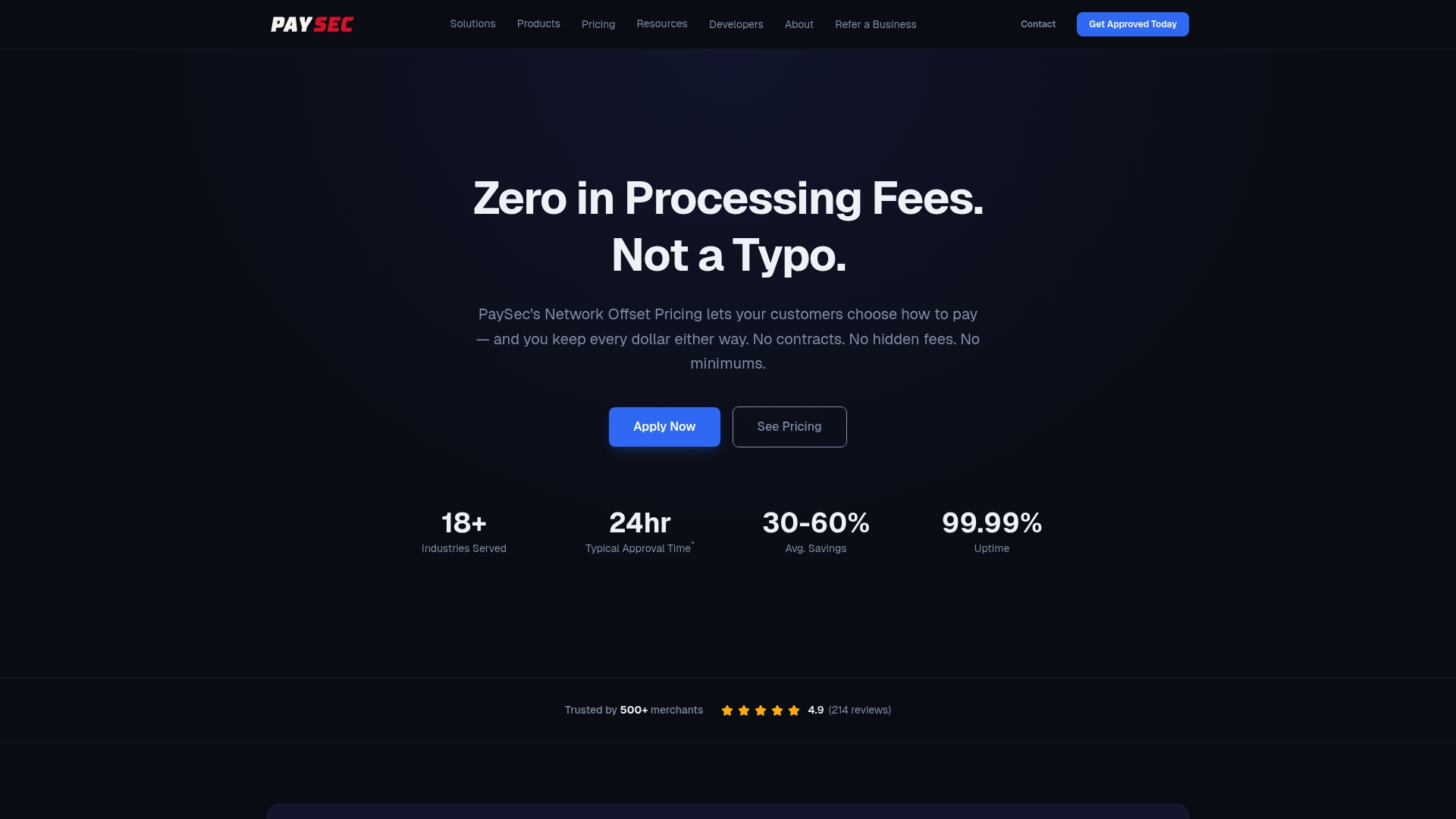
Merchants who process payments through Paysec get a processor that has already done the regulatory work. Network Offset Pricing eliminates hidden fees and delivers 30–60% savings on processing costs, while PCI DSS Level 1, SOC 2, and bank-sponsored settlement keep merchants outside transmitter scope from day one.
Getting started is straightforward:
- Request your funds-flow diagram and written attestation confirming Paysec never pools or holds your customers' funds.
- Share your transaction volumes for a risk review and pricing comparison.
- Start onboarding with no long-term contract and no minimums at Paysec pricing.
Sample attestation and compliance documentation are available on request.
Sources
Primary regulatory and practitioner sources used in this article:
- Fincen
- Money transmission in the payment-facilitator mode | Venable LLP
- Does Your Agentic-Payments Startup Need a Money Transmitter License? | Astraea Counsel
- FFIEC BSA/AML Risks Associated with Money Laundering And Terrorist Financing - Third-Party Payment Processors
This article is general information, not a substitute for advice from a qualified lawyer. Consult a qualified legal professional about your own circumstances before acting on anything here.
FAQ
Do merchants need a money transmitter license to accept payments?
No. When a merchant uses a payment processor structured as an agent of the payee, FinCEN's rulings confirm the merchant is not a money transmitter. The licensing obligation falls on the processor.
What triggers money transmitter status for a business?
Custody or control of customer funds is the primary trigger. Pooled wallets, platform-controlled disbursement timing, and stored-value issuance are the most common patterns that create transmitter exposure.
What certifications should a merchant require from its processor?
Request PCI DSS Level 1 certification, a SOC 2 report, FinCEN registration documentation, and the name of the acquiring bank sponsor. A written funds-flow attestation confirming no pooled custody is also standard.
Does Paysec hold or pool merchant customer funds?
No. Paysec settles directly to merchant bank accounts using bank-sponsored rails, with no pooled custody of merchant customer funds. Written attestation of this flow is available during onboarding.
What should a marketplace operator do if it controls seller payouts?
A marketplace that holds seller balances and controls disbursement timing likely needs to consult payments counsel and evaluate state money transmitter licensing. Review the specific flow against the control test before scaling that feature.