

Finding payment processing software that supports local payment methods, provides clear fee structures, and fits Indonesian merchants remains difficult. Many services list incomplete pricing, require direct sales for quotes, or lack tailored support for eCommerce and local payment channels. Merchants can weigh pricing, integration needs, and local payment coverage to pick the best platform for their business model.
Table of Contents
PaySec
At a Glance
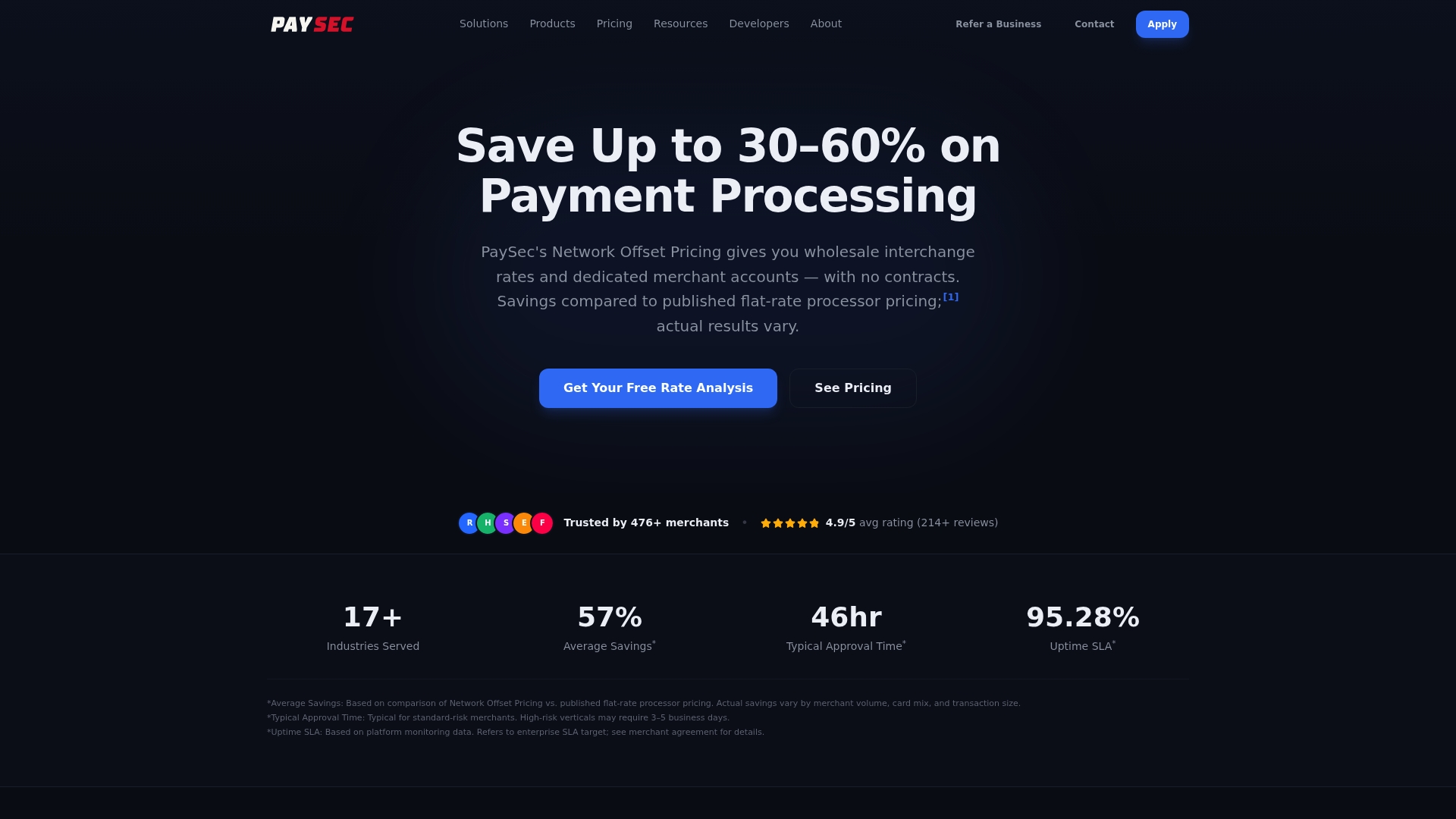
PaySec's marketing materials state merchants can reduce payment processing costs by 30–60% compared with flat rate processors. The vendor advertises onboarding as quick as 48 hours. That combination targets merchants who want lower net fees, and faster activation than typical aggregator paths.
Core Features
PaySec centers on Network Offset Pricing that passes wholesale interchange rates through to merchants with a fixed margin. The platform issues dedicated merchant accounts so each business retains its own merchant identification number and account controls. The vendor advertises PCI DSS Level 1 and SOC 2 compliance and offers automated B2B enhanced data support to lower interchange where possible.
Key Differentiator
Offers wholesale interchange pass through rates with a fixed margin and dedicated merchant accounts, unlike typical aggregator models. That structure keeps interchange visible on statements and preserves merchant control over risk and funds. For merchants processing at scale, this model alters how fees flow and how savings are calculated.
Pros
Those savings translate into tangible reductions for merchants who process a consistent mix of card types. Dedicated merchant accounts provide clearer reconciliation and reduce the risk of account level complications. PaySec supports high volume and high risk industries with dedicated account managers who handle vertical specific questions and integration needs. The platform also automates enhanced data for B2B transactions, which can lower certain interchange tiers and improve net margins.
Cons
- Actual savings vary based on volume and transaction mix.
Notable Integrations
- Integrations include QuickBooks, Shopify, Toast, Square POS, Xero, Salesforce, WooCommerce, and Clover.
Who It's For
Merchants processing roughly $25K+ monthly or growing toward that level will see the clearest benefit. Businesses in high risk industries that struggle with standard aggregator limits will find the dedicated account model useful. Retail, eCommerce, hospitality, and healthcare merchants who need transparent fee math and vertical specific support match this profile.
Unique Value Proposition
A pass through interchange model with a fixed margin and a dedicated merchant account gives merchants direct visibility into wholesale card costs. That setup lets you compare net revenue before and after fees and plan pricing or margins with clearer math. For teams that reconcile daily sales and payments, this reduces guesswork about where fees are applied.
Real World Use Case
According to the company, a healthcare provider moved off a flat rate processor and cut monthly processing costs by over 35%. The provider gained a dedicated account manager and kept a clearer audit trail for healthcare data security needs. That case shows how cost savings and account ownership can align for regulated merchants.
Pricing
Public pricing is not published. PaySec uses a wholesale interchange pass through model with a fixed margin and requires a sales consultation to quote specific rates. The vendor states there are no long term contracts and that pricing varies by volume and card mix.
Website: https://paysec.ai
Midtrans
At a Glance
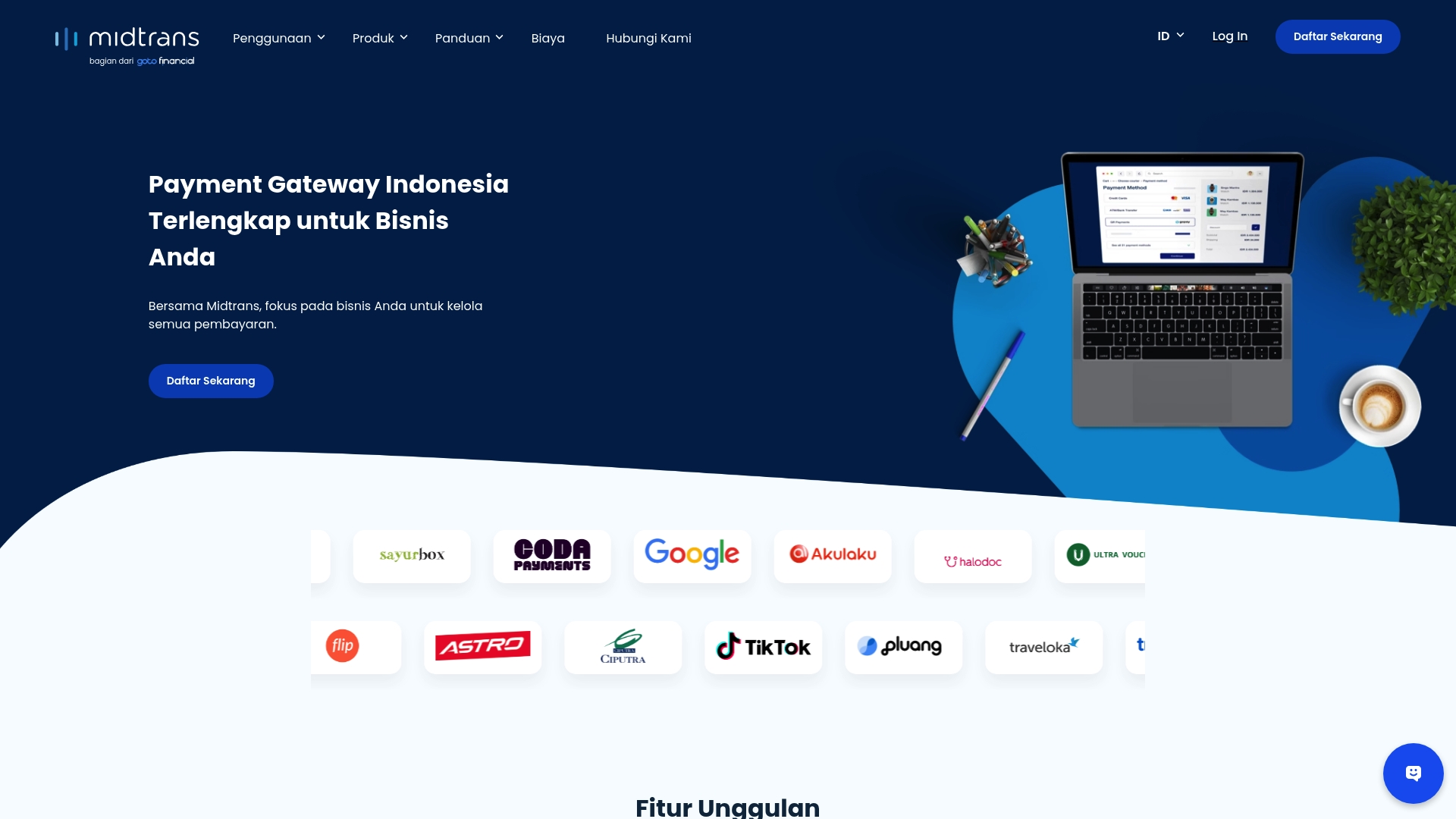
According to the company, Midtrans supports 25+ payment methods, covering bank transfers, local e wallets, credit and debit cards, and over the counter payments. The platform dates back to 2012 and targets Indonesian merchants across online and offline channels. That wide method set helps sellers accept payment where their customers already pay.
Core Features
Midtrans combines payment links and chat checkout with API and plugin options for major e commerce platforms. The service automates transaction reconciliation and reporting so accounting teams spend less time matching orders to receipts. Security features include PCI DSS and ISO 27001 compliance, AES 256 encryption, and anti fraud protections.
Key Differentiator
Midtrans stands out for its local payment coverage and ready integrations with Indonesian payment methods. That focus gives merchants access to payment options rare in global gateways while still offering APIs for custom flows.
Pros
Midtrans supports the payment channels that matter to Indonesian shoppers, which reduces checkout friction and cart abandonment. Its plugin library and REST APIs let platforms connect quickly to common carts and marketplaces. The company advertises transparent, pay per successful transaction pricing, which aligns costs with actual sales and simplifies cash flow planning.
Cons
- Fee structures for some methods can be higher than local bank alternatives, according to third party reviews. This can raise per transaction cost for low margin items.
- API integration can be technical and may require developer time. Non technical teams might need outside help for custom implementations.
- Customer support and onboarding responsiveness varies by account size and region. Some merchants report slower initial responses.
When It May Not Fit
Midtrans is less suitable for businesses that sell primarily outside Indonesia because its payment method mix focuses on local acceptance. Teams without developer resources may find the initial setup cumbersome when they require custom API work. Companies seeking a global gateway with identical payment coverage in many countries should evaluate other options.
Notable Integrations
Midtrans offers APIs for custom integration and plugins for major carts. Available connectors include WooCommerce, Shopify, and WordPress plugins. These integrations speed deployment for common store platforms and reduce the need for custom code.
Who It's For
Midtrans fits Indonesian merchants from startups to large enterprises that need local payment coverage and reconciliation tools. Marketplaces and retailers with multi outlet setups will benefit from the reporting and reconciliation features. Merchants who prefer pay per successful transaction pricing will find the billing model predictable.
Real World Use Case
A mid sized fashion retailer uses Midtrans to accept local bank transfers, e wallets, and international cards. Reconciliation runs automatically each day, which cuts manual bookkeeping work. Checkout conversion rose after adding local payment links for social commerce sales.
Pricing
Midtrans charges fees only on successful transactions, and rates vary by payment method. The company lists transparent method specific rates on its website so merchants can compare costs before signing up. Volume discounts or enterprise pricing are available for larger accounts.
Website: https://midtrans.com
DOKU

At a Glance
DOKU reports it has serviced hundreds of thousands of merchants and millions of transactions since 2007. The company positions itself as a licensed payments infrastructure provider for Indonesia with a history of working across retail, government, and enterprise clients. Certifications cited include PCI DSS, AES 256, and ISO/IEC 27001, which the vendor lists as part of its security and compliance posture.
Core Features
DOKU combines online and offline payment methods into a single platform and supports bank channels, cards, e wallets, and QRIS for local acceptance. Integration paths include API, plugins, and a ready to use dashboard that lets developers and operations teams split responsibilities. The platform also offers payout services, wallet as a service, sub accounts, and cross border remittance capabilities alongside its security controls such as PCI DSS compliance.
Key Differentiator
The service focuses on a complete end to end payment ecosystem tailored to Indonesia while supporting regional expansion. That emphasis on local payment rails plus international security standards differentiates it from generic global gateways.
Pros
DOKU groups payment acceptance, disbursement, and wallet management into a single vendor relationship, which reduces vendor count for merchants. The platform advertises strong regulatory licensing and recognized security certifications, which supports trust for enterprise and government work. Flexible integration options let small teams start with a dashboard and let engineering teams adopt API controls later without changing the core processing partner.
Cons
- Pricing is not publicly listed. You must contact DOKU for exact fees and plan details.
- Custom or complex enterprise workflows may require specialized integration and extra implementation time. This can add to initial project scope.
- The product focuses on Indonesia and regional commerce. Global merchants with no Indonesia presence may find features less relevant.
When It May Not Fit
If your business has exclusively offline sales with no digital strategy, DOKU may offer more capability than you need. Organizations that lack developer capacity and require a plug and play international payment solution without local rails may prefer a simpler global gateway. Large firms needing bespoke settlement arrangements should plan for a custom integration and a longer onboarding timeline.
Who It's For
DOKU fits merchants and platforms operating in Indonesia that need local payment methods, wallet support, and payout services. It also suits fintech firms and enterprises that want an integration path from dashboard to API based control. Large retail chains and government contractors will benefit from the vendor's licensing and compliance focus.
Real World Use Case
A retail chain implemented DOKU's payment gateway to accept cards, e wallets, and QRIS across stores and its e commerce site. The chain used sub accounts to route funds by store and the wallet service for loyalty balances. Payout services handled supplier remittances with the same provider, simplifying reconciliation.
Pricing
Pricing is listed as not applicable and informational only in the vendor materials. Exact rates and fee structures require direct inquiry with DOKU sales to receive a tailored quote for your transaction mix and settlement needs.
Website: https://doku.com
Comparison of alternatives
For businesses exploring payment processing alternatives, an analysis of these options highlights distinct strengths and tailored functionalities across platforms.
Industry-specific suitability
PaySec excels in accommodating industries typically labeled as high-risk by ensuring dedicated merchant accounts with transparent fee structures. This is demonstrated by its support for businesses processing varied transaction types and its compliance capabilities tailored to regulatory requirements. In contrast, competitors such as Midtrans mainly cater to local Indonesian merchants prioritizing diverse payment options, and DOKU provides a end-to-end financial ecosystem suitable for regional enterprises.
Local payment versatility
Midtrans offers a unique advantage in its vast array of localized payment methods, supporting over 25 types, including bank transfers and popular e-wallets, catering predominantly to the Indonesian payment landscape. Businesses aiming to enhance conversion rates through familiar local payment channels find profound value here. Conversely, DOKU capitalizes on being a trusted regional player by incorporating wallet management and cross-border remittance into its feature set, adding significant utility for enterprises with dynamic financial operation requirements.
Best fit
- Merchants processing high monthly volumes seeking transparent fee applications and cost-effective scaling should select PaySec.
- Businesses requiring local payment method acceptance to maximize consumer convenience may prefer Midtrans.
- Enterprises needing an integrated financial system for transactions and regulatory compliance may opt for DOKU.
- Indonesian government contractors requiring secure, customized payment handling can benefit from DOKU's capabilities.
Our pick
PaySec is an excellent choice for merchants focused on optimizing payment fees with high volume processing needs or specific control requirements. The ability to directly assess wholesale costs through Network Offset Pricing ensures clarity and cost-effectiveness. While competitors Midtrans and DOKU present solutions for local merchant operations and integrated financial management respectively, PaySec's unique approach to tailored industry solutions makes it the preferred option for scale-oriented businesses.
Merchants can compare payment processing platforms based on transparency in fee structures and integrations with local commerce methods.
| Product | Core Feature | Key Differentiator | Best For | Pricing | Notable Limitation |
|---|---|---|---|---|---|
| PaySec | Network Offset Pricing with fixed margin | Dedicated merchant accounts with visible fees | High volume and high risk | Price not published | Savings dependent on volume and transaction mix |
| Midtrans | 25+ local payment methods support | Local payment coverage with API integrations | Indonesian marketplaces | Transparent rates | Higher fees for certain methods |
| DOKU | Unified online and offline payment system | Wallet as a service and regional disbursement | Large enterprises in Indonesia | Price not published | Custom setups require longer implementation times |
Choosing Transparent Payment Solutions Beyond JakartaGlobe.id Alternatives
Businesses looking for clear cost savings and control over payment processing will find Paysec stands apart. Paysec solves the challenge of high transaction fees with Network Offset Pricing that passes wholesale interchange rates directly to merchants with a fixed margin. This method eliminates hidden fees and long-term contracts, giving merchants in sectors like healthcare, eCommerce, and restaurants transparent pricing and real savings between 30 and 60 percent.
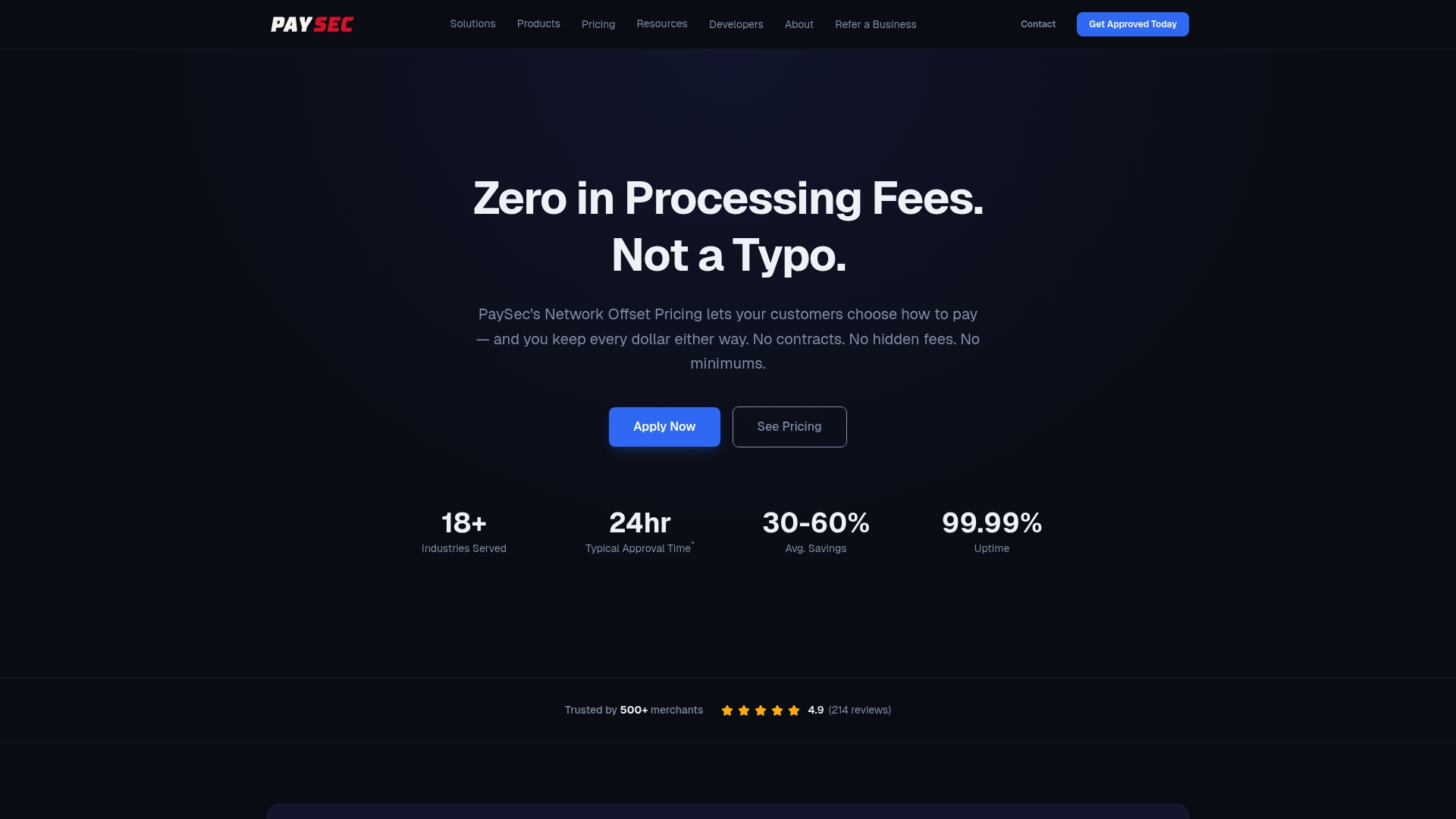
Explore how Paysec’s dedicated merchant accounts improve reconciliation and let your team see exactly where fees apply. Visit Paysec to learn about flexible onboarding and detailed reporting that supports financial clarity. Take charge of your payment costs and start measuring your savings with Paysec’s revolutionary approach.
FAQ
How can Paysec help reduce payment processing costs for my business?
Paysec allows merchants to reduce payment processing costs by 30–60% compared to flat rate processors. The platform's Network Offset Pricing passes wholesale interchange rates directly to merchants, making costs clearer and more manageable. This structure is particularly beneficial for businesses looking to lower their net fees quickly.
What is the difference between Paysec and Midtrans in terms of payment coverage?
Midtrans supports 25+ payment methods, including local e-wallets and bank transfers, making it a solid choice for businesses focused on Indonesian merchants. Paysec, on the other hand, focuses on passing through wholesale rates which empowers merchants with clearer control over fees and risk management. Businesses should choose based on whether they need diverse local payment methods or cost efficiency through direct interchange access.
Can Paysec handle high-risk industries effectively?
Yes, Paysec is designed to support high-volume and high-risk industries with dedicated account managers. This includes vertical-specific support that addresses unique integration and compliance needs, making it suitable for businesses in sectors such as retail, healthcare, and hospitality.
What is a notable feature of Paysec that differentiates it from other platforms?
Paysec offers dedicated merchant accounts with a fixed margin, which gives businesses direct visibility into their processing fees through a clear audit trail. This setup allows merchants to plan their pricing or margins based on accurate figures, making financial management more straightforward.
How quickly can I onboard with Paysec?
Merchants can expect onboarding with Paysec to be as quick as 48 hours. This rapid activation is ideal for businesses looking to start processing payments without the delays typically associated with traditional aggregators. Merchants can efficiently begin operations while benefiting from lower fees.