

No. Under U.S. card-network rules and prevailing regulatory guidance, merchants cannot add a surcharge to debit or prepaid card transactions. This rule holds even when a customer selects "credit" at the terminal, because the underlying product is still a debit card. Visa, Mastercard, American Express, and Discover all enforce this restriction, and the Consumer Financial Protection Bureau actively monitors related fee practices.
TL;DR:
- Credit surcharge programs require 30 days’ notice to your acquiring bank, advance disclosure, receipt itemization, and fees within brand caps and actual acceptance costs.
- State laws can impose stricter surcharge limits, so check every operating location; Louisiana’s proposed Senate Bill 254 would bar retail debit surcharges starting August 1, 2026.
- Convenience fees apply to alternative payment channels and should be optional, disclosed, and consistent across card types; cash discounts and ACH provide other cost recovery options.
- Cash back fees are separate from surcharges, but the CFPB monitors fees on debit and prepaid purchases; disclose any such charge clearly and apply the policy consistently.
Table of Contents
- What the card networks require from merchants
- State laws add another layer merchants must follow
- Surcharge vs. convenience fee vs. cash-back fee
- Legal alternatives and a compliance checklist for merchants
- Why transparency should drive every fee decision
- How PaySec helps merchants manage processing costs
- FAQ
- Sources
What the card networks require from merchants
Visa, Mastercard, American Express, and Discover each build surcharge eligibility around one line: credit cards only. Their joint guidance states that network rules mandate that surcharges only apply to credit card transactions, while debit and prepaid transactions are explicitly excluded, regardless of how the transaction gets processed.
A debit card run as "credit" is still a debit card. Network rules confirm that debit and prepaid cards remain ineligible for surcharges even when the cardholder chooses the credit path at checkout, whether the transaction is signature-based or PIN-based. Routing a transaction through a different network rail does not reclassify the underlying card product, and surcharging it anyway puts a merchant in violation of its processor agreement.
For merchants who do surcharge eligible credit cards, the networks attach real obligations:
- Notify your acquiring bank at least 30 days before starting any surcharge program.
- Disclose the surcharge at the point of entry, before the transaction completes, and again as a line item on the receipt.
- Populate required processing fields so the surcharge amount is transmitted correctly through the network.
- Keep the surcharge at or below the cap set by the applicable card brand and never exceed your actual cost of acceptance.
Our guide to card brand surcharge rules walks through how these notice and disclosure steps apply in practice for different business types.
State laws add another layer merchants must follow
Card-network rules set the floor, but state law can go further. A handful of states still restrict or ban surcharging altogether, and merchants have to satisfy both the network agreement and whatever their state legislature has passed, since neither one overrides the other.
Louisiana offers a clear, current example. Senate Bill 254, introduced in the 2026 Regular Session, prohibits retail businesses from imposing a surcharge on a debit card transaction. The bill defines what counts as a surcharge, authorizes the state attorney general to enforce the prohibition, sets civil penalties for violations, and includes reporting requirements, with an effective date of August 1, 2026, in the bill text.
That kind of state-level action is a reminder that surcharge compliance is not a one-time setup. A few practical points for merchants operating across state lines:
- State statutes can prohibit or cap surcharges independently of what the card networks allow.
- Rules vary by state, so a program that is compliant in one location may not be compliant in another.
- Legislatures revisit these statutes, so an existing program may need a fresh review.
Before adding any fee tied to a card transaction, check your state attorney general's current guidance and confirm your plan against both the state statute and your card brand's published rules.
Surcharge vs. convenience fee vs. cash-back fee
These three terms get used interchangeably in everyday conversation, but each one carries a distinct legal meaning and a different set of rules.
- Surcharge: An extra amount a merchant adds specifically for paying with a credit card. Network rules limit surcharges to credit card transactions only, with debit and prepaid cards excluded entirely. A restaurant adding an extra amount to a credit card bill, disclosed at the register, is an example of a surcharge.
- Convenience fee: A separately disclosed fee tied to an alternative payment channel, such as paying a utility bill by phone instead of through a standard channel. These tend to be permissible when they are optional, clearly disclosed, and applied uniformly across card types rather than singled out for credit cards. Our breakdown of convenience fees versus surcharges covers where that line typically falls.
- Cash-back fee: A fee charged when a customer requests cash back during a debit card purchase. The CFPB found that large retail chains are charging cash-back fees to customers using debit and prepaid cards, and the bureau is watching this practice closely for its effect on consumers who rely on cash access at the point of sale.
Understanding which bucket a fee falls into matters, because the compliance obligations attached to each one are not interchangeable.
Legal alternatives and a compliance checklist for merchants
Merchants looking to offset processing costs without running into debit-surcharge rules have several lawful paths available:
- Run a compliant credit-card surcharge program where state law allows it, following every network notice and disclosure requirement.
- Offer a cash discount for customers who pay with cash or other non-card methods, which sidesteps surcharge rules entirely.
- Apply a convenience fee where your payment channel and card brand rules support one.
- Encourage ACH transfers or other lower-cost payment rails for recurring or high-value transactions.
For merchants pursuing a credit-card surcharge program specifically, a short checklist keeps the rollout clean:
- Confirm your state permits surcharging and check for any recent statutory changes.
- Notify your acquiring bank and the relevant card brand at least 30 days before launch.
- Set the surcharge at or below the applicable brand cap and tie it to actual acceptance cost.
- Post clear signage at entry points and display the surcharge as its own line item on receipts.
- Configure your POS and processor settings so required transaction fields are populated correctly.
Pro Tip: Keep a dated file of your surcharge notices, signage photos, and receipt samples. If a dispute or audit ever comes up, that paper trail settles it fast.
Given the CFPB's active interest in cash-back fees, merchants who charge for cash back should keep that policy conservative, well documented, and consistent across every transaction. Our credit card surcharge laws guide and our PCI-compliant surcharging post both go deeper into the notice timelines and field-level processor settings referenced above.
Why transparency should drive every fee decision

The merchants who avoid fee disputes are the ones who treat disclosure as a feature, not a formality. Posting the fee before checkout, itemizing it on the receipt, and keeping the amount tied to a real, documented cost does more to protect a business than any clever workaround ever will.
We built our approach around that same principle. Our Network Offset Pricing model passes through true wholesale interchange rates instead of hiding costs in a flat-rate markup, which keeps the economics visible to both merchant and customer. If you are weighing a credit-card surcharge program, a cash discount, or another price-recovery option, talk to your acquirer, or reach out to us, about structuring it in a way that holds up to scrutiny.
— PaySec Marketing Team
How PaySec helps merchants manage processing costs
We built our pricing around one idea: merchants should see exactly what they pay and why.
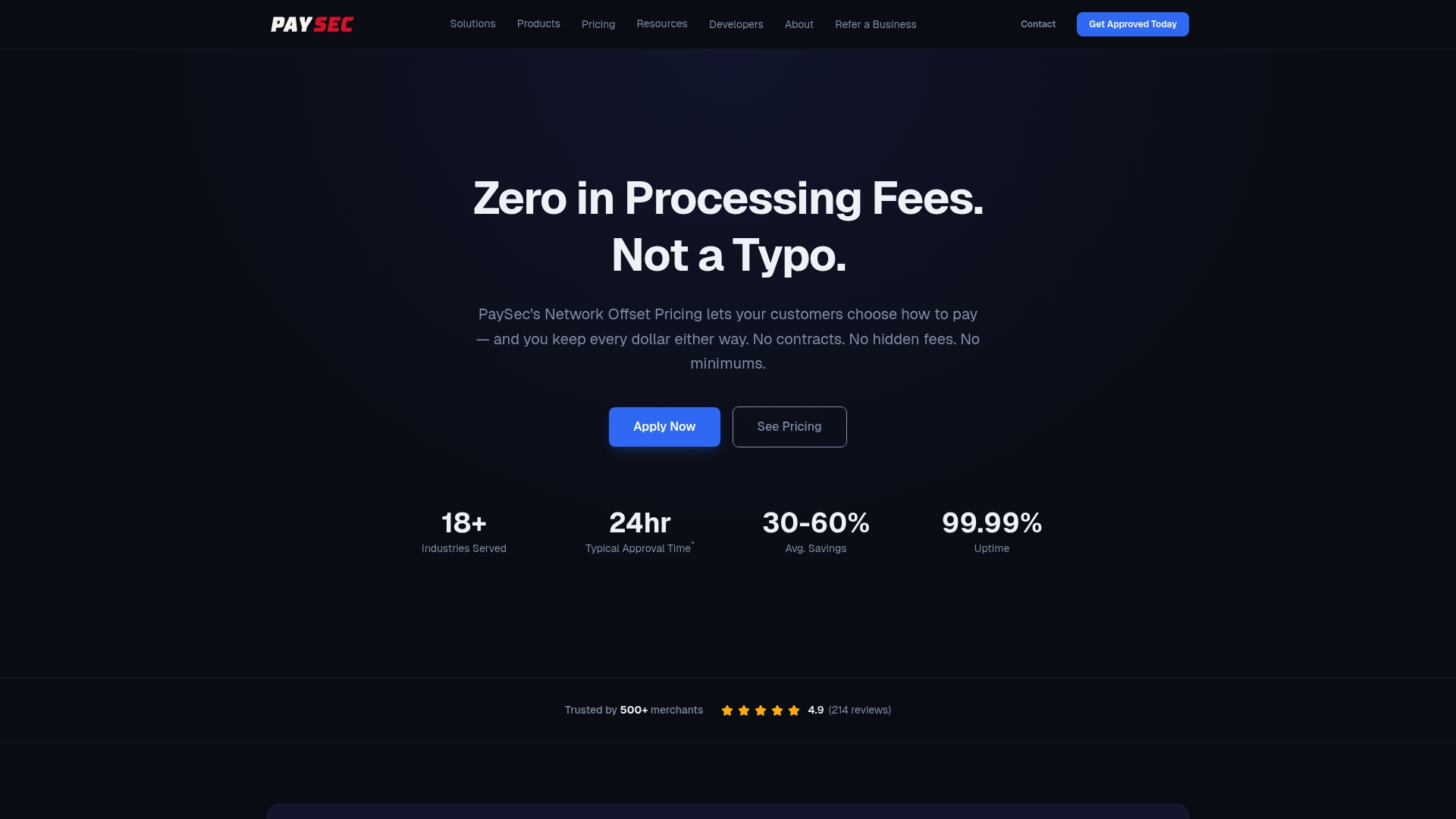
A few ways to put that to work:
- Review our Network Offset Pricing page to see how the model applies to your transaction volume.
- Explore our merchant services for in-store, eCommerce, and mobile processing built around transparent pricing.
- Check our pricing plans, including Network Offset, Flat Rate, and Custom Enterprise, to find the right fit.
If you want help structuring a compliant fee strategy alongside lower processing costs, get in touch with our team to talk through your options.
FAQ
Do banks charge you for having a debit card?
Some banks charge monthly maintenance fees or ATM fees tied to a debit card, but these come from the issuing bank, not from a merchant surcharge at checkout. Fee structures vary by bank and account type, so check your specific account terms for details.
What is a card surcharge?
A card surcharge is an extra amount a merchant adds to a transaction specifically because the customer paid with a credit card. Card network rules restrict surcharges to credit card transactions only, and merchants must disclose the fee before the sale completes and again on the receipt.
Is a convenience fee the same as a surcharge?
No, a convenience fee applies to an alternative payment channel, like paying by phone instead of in person, while a surcharge applies specifically to paying with a credit card instead of cash. The two have different disclosure rules and different conditions for when they are permissible.
What are the laws regarding credit card surcharging in Louisiana?
Louisiana's Senate Bill 254 addresses debit card surcharges specifically, prohibiting retail businesses from imposing a surcharge on a debit card transaction, with enforcement by the state attorney general and civil penalties for violations. Merchants surcharging credit cards in Louisiana still need to follow applicable network rules and should confirm current state requirements before launching a program.
Can merchants charge a fee for cash back on a debit purchase?
Yes, cash-back fees on debit transactions are a separate practice from surcharging, and the CFPB has found that large retail chains charge these fees to customers using debit and prepaid cards. Because the bureau is monitoring this practice closely, merchants should keep any cash-back fee policy clearly disclosed and consistently applied.
Sources
- U.S. Merchant Surcharge Q and A
- CFPB Report Finds Large Retail Chains Charging Cash-back Fees to Customers Using Debit and Prepaid Cards | Consumer Financial Protection Bureau
- SLS 26RS-121 REENGROSSED 2026 Regular Session SENATE BILL NO. 254 BY SENATOR MIZELL