
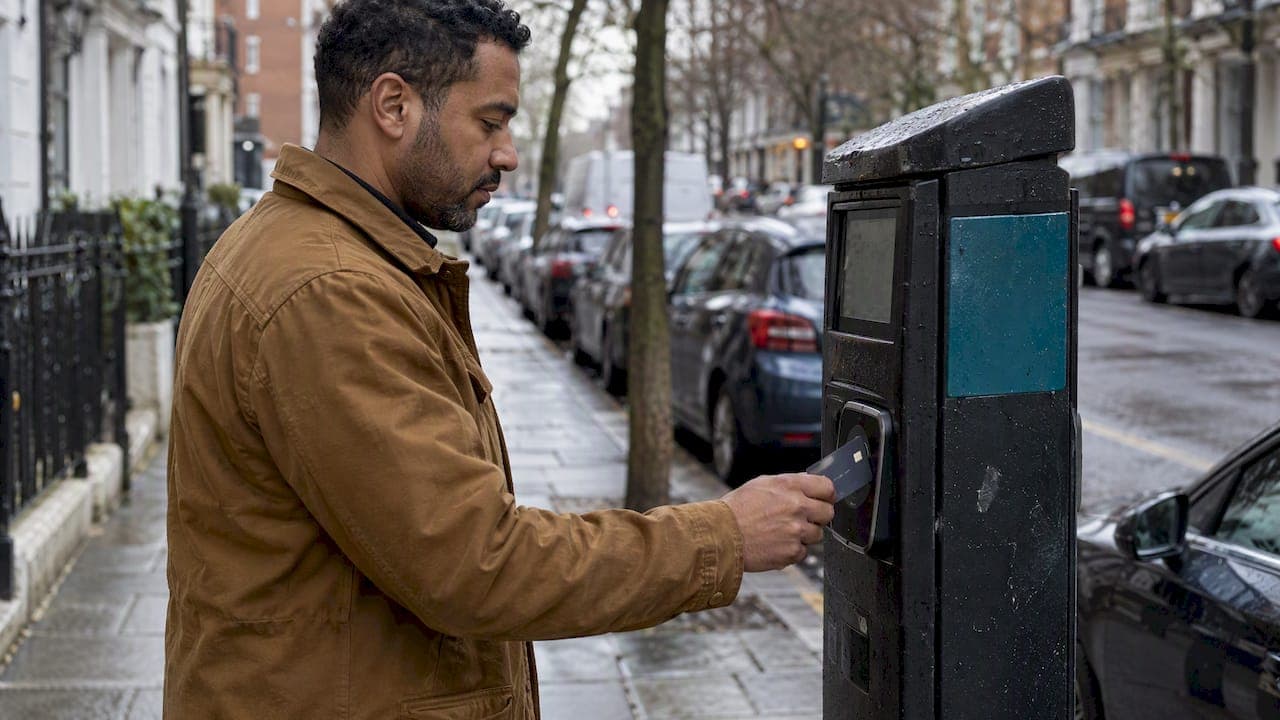
Small ticket interchange is a special, lower-percentage rate that card networks set for low-dollar, card-present purchases, paired with a small fixed fee per transaction. The rate only applies when a sale meets the network's rules. Mastercard, for example, applies its Small Ticket rates to transactions of $5.00 and below. Visa publishes its own Small Ticket categories. Know the thresholds and qualification rules, and you can see why a $4 coffee or a $3 car wash costs more than the headline percentage suggests.
TL;DR
- Small ticket interchange is a network-set rate for low-dollar card-present sales, made of a percentage plus a fixed per-transaction fee.
- Mastercard applies Small Ticket rates to transactions of $5.00 and below: 1.65% to 2.30% + $0.02 card-present, and 1.95% to 2.60% + $0.02 card-not-present.
- Visa lists consumer credit Small Ticket at 2.20% or 1.90% (each with a $0.04 minimum, depending on the product) in its schedule effective October 24, 2026.
- Qualification matters: swiped data, electronic authorization data and prompt settlement decide whether a sale gets the rate.
- Your pricing model decides what you keep. Interchange is only one layer of what a merchant pays.
Table of Contents
- What small ticket interchange is
- Current small ticket rates by card network
- What it costs on a real small sale
- Which transactions qualify
- Why small ticket categories don't fix the problem alone
- How pricing model changes what you pay
- Who benefits most
- Steps to keep low-dollar sales profitable
- Perspective from PaySec
- See your small-ticket costs at wholesale
- FAQ
- Sources
What small ticket interchange is
Interchange is the fee set by the card networks and paid to the bank that issued the customer's card. Visa describes interchange reimbursement fees as transfers between financial institutions that balance the payment system. Merchants, in turn, pay their own financial institution a merchant discount rate for the wider processing service.
Most interchange categories use the same formula: a percentage of the sale plus a fixed amount. On a $100 sale, the percentage does most of the work. On a $3 sale, the fixed amount does. Networks created small ticket categories so that low-value purchases, such as quick-service food, parking, transit, vending and convenience items, can be accepted by cards at all without a heavy fixed fee dominating the cost.
The small ticket category usually trades a lower fixed fee for a percentage that is not especially low. That is the key idea to hold onto. You are not getting a discount on the whole sale. You are getting a different shape of fee that suits a small basket better than the standard category.
Current small ticket rates by card network
Rates change on a schedule set by each network, so treat the figures below as the published schedules at the time of writing and confirm against the network documents or your processor statement.
Visa
Visa's U.S. schedule, effective October 24, 2026, lists several relevant categories:
- Consumer credit, Small Ticket: 2.20% (minimum $0.04), or 1.90% (minimum $0.04) for Traditional/Rewards and All Other Products.
- Service station and government, Small Ticket: 1.65% + $0.04.
- Debit: Visa lists "CPS/Small Ticket, Debit" under exempt Visa check-card debit. Regulated debit uses the separate regulated debit rate instead.
Visa's schedule also shows that some rates carry minimums or caps, and that a small-merchant transaction that disqualifies from the Small Merchant Fee Program is assessed at the next applicable rate.
Mastercard
Mastercard's U.S. Region document, effective April 11, 2025, is more direct about the threshold. Small Ticket rates apply to transactions of $5.00 and below:
| Transaction type | Rate range |
|---|---|
| Small Ticket, card-present | 1.65% to 2.30% + $0.02 |
| Small Ticket, card-not-present | 1.95% to 2.60% + $0.02 |
The range depends on the card product. A basic consumer card sits at the low end, and premium cards sit at the high end. Mastercard typically updates interchange rates and criteria semiannually and encourages merchants to ask their acquirer which rates may apply to them.
Discover and others
Discover does not publish its full interchange schedule online in the same way, so merchants usually see its effect on their processor statement. Look at the interchange line items there rather than relying on a guessed figure.
What it costs on a real small sale
The fixed part of the fee is what makes small sales feel expensive. Take a $4.00 card-present Mastercard sale at the two ends of the published range:
| Card product | Percentage fee | Fixed fee | Total interchange | Share of sale |
|---|---|---|---|---|
| Low end (1.65% + $0.02) | $0.066 | $0.02 | about $0.086 | about 2.2% |
| High end (2.30% + $0.02) | $0.092 | $0.02 | about $0.112 | about 2.8% |
These are our own arithmetic from the published rates. Now compare a regulated debit card. Under the Durbin Amendment, the Federal Reserve capped debit interchange for large issuers. The final rule set the cap at 21 cents plus 0.05 percent of the transaction value and a 1 cent fraud-prevention adjustment, and the Fed has reviewed that cap since. On a $4.00 sale, the fixed part alone is roughly 22 cents, which is over 5% of the sale. That is why debit and credit mix matters so much in low-ticket businesses, and why we cover it in our guide to debit vs. credit fees.
The lesson: for a merchant with average tickets under $5, a single percentage on a pricing sheet tells you very little. The card mix, the network and the qualification status tell you more.

Which transactions qualify
A sale does not get a rate because it is small. It gets the rate because it meets every requirement tied to that rate. Mastercard lists merchant category, the time between authorization and clearing, magnetic-stripe data, enhanced transaction data, and merchant sales and transaction volume as criteria, and all requirements for a selected rate must be met.

For Visa's CPS/Small Ticket category, one public interchange qualification matrix spells out the basics. The merchant must pass the magnetic card swipe in the authorization request, include electronic authorization data in the settlement record, and settle within one day of the transaction. The same matrix notes that CPS/Small Ticket excludes several industries, including wire transfers, money orders, casino gaming and federal government agencies.
A practical qualification checklist
- Confirm the amount. Check the ceiling for each network. Mastercard's is $5.00 and below.
- Capture card-present data. Swiped, dipped or tapped sales carry the data that card-not-present entries lack.
- Send complete authorization data in the settlement record.
- Settle every day. Batches that sit for several days can fall to a higher category.
- Review your statement monthly. Look for transactions that landed in a standard or downgraded category.
Qualification depends on how data is captured, not only on the amount. Even outside the store, the way a payment is taken changes the category. A phone order keyed by an agent is not a swipe, which is one reason PCI DSS scope in call centers matters to merchants who take card details by voice. Handling payment data securely and categorizing it correctly are linked decisions.
Why small ticket categories don't fix the problem alone
Small ticket interchange helps, but several things limit how much of it reaches your bottom line.
- Debit cards often follow a different rule set. Regulated debit has its own fixed-fee structure, so the savings on credit categories do not carry across.
- Not every low-dollar sale qualifies. Keyed, delayed or incompletely captured sales miss the category.
- Interchange is not the whole fee. Network assessments, processor markup and per-item fees sit on top.
- Pricing models can hide the category. With a flat rate, you never see whether a sale got small ticket treatment, because you pay the same blended percentage either way.
Our article on the small-ticket problem walks through how a $5 sale can cost far more than the headline rate suggests under blended pricing. For the full background, see our definitive guide to interchange fees.
How pricing model changes what you pay
The same $4 sale produces very different bills depending on how your processor charges you.
- Flat rate: one percentage plus a fixed fee on everything. Simple to read, but it blends small and large tickets together, and the fixed fee weighs most on small sales.
- Interchange-plus: the actual interchange for each transaction, plus a stated markup. Small ticket categories flow through to you when the sale qualifies. Our interchange-plus checklist shows how to calculate the markup.
- Network offset pricing: wholesale interchange passes through at cost, and the pricing is structured so a merchant can offer customers flexible payment options while retaining full revenue. See how flat-rate, interchange-plus and network offset pricing compare.
For a merchant with many small tickets, pass-through pricing is the model that lets small ticket categories do their job, because the rate the network sets is the rate that shows up on the statement. If you are sorting out which fee types exist beyond interchange, our overview of payment processing fee types lists each line on a statement.
Who benefits most
Small ticket pricing matters most to merchants whose average sale is a few dollars:
- Quick-service restaurants and coffee counters, where many orders fall near or under the threshold.
- Convenience, vending and kiosk retail, where single items sell for a few dollars.
- Parking, car wash and transit, where one fixed price is charged repeatedly.
- Fuel and government payments, where Visa lists its own small ticket categories.
- Subscription and SaaS add-ons, where small monthly charges are card-not-present and follow card-not-present rates.
Restaurant chains often see a mix. A breakfast order might fall under the threshold, while a dinner check does not. A statement that breaks out each interchange category lets operators see how much volume actually qualifies.
Steps to keep low-dollar sales profitable
- Pull three months of statements and group transactions by average ticket.
- Identify sales under $5. These are your candidates for small ticket treatment.
- Check how they were captured. Card-present sales should be swiped, dipped or tapped, not keyed.
- Compare the interchange line with the published schedule for the network and card type.
- Look at your processor's markup and per-item fee. On small tickets, a fixed per-item add-on can exceed the interchange itself.
- Encourage contactless payments. Tap payments are fast and carry card-present data. See our page on contactless payment processing.
- Settle daily so no sale falls out of a time-sensitive category.
For a deeper look at how data quality changes the rates a merchant pays, see our case study on an auto dealership that saved $2,000 a month with interchange optimization. That example is B2B, and the principle is the same: the details of each transaction decide the rate.
Perspective from PaySec
Small tickets expose pricing models faster than any other kind of sale. When an average order is a few dollars, a fixed fee that looks trivial on a rate sheet becomes a visible share of every sale.
We built Network Offset Pricing so that merchants see the real wholesale interchange rate instead of a blended number. That means a sale that qualifies for a small ticket category is priced as one. Our merchants report savings of 30-60% compared with major processors, and one client cut processing costs by 42%.
Transparency is the point. We provide detailed transaction reporting, so a restaurant, retailer or healthcare practice can see what each card type, network and capture method costs. There are no hidden fees, no minimums and no long-term contracts, and we approve merchants quickly, including in high-risk verticals.
If low-dollar sales are a large share of your volume, start by reading your statement line by line. Then compare it with what pass-through pricing would show.
PaySec Marketing Team
See your small-ticket costs at wholesale
PaySec offers Network Offset pricing, flat rate and custom enterprise pricing, with no monthly minimums and no long-term contracts. Our team supports restaurants, eCommerce stores, healthcare practices, SaaS platforms and CBD retailers with in-store processing, eCommerce gateways, mobile payments, recurring billing and fraud prevention.
Card-present counter service? Our Free Placement terminals start at $0 per month. To compare structures for your own volume, review our pricing options, or see how Network Offset Pricing works.
FAQ
What is the small ticket interchange threshold?
It depends on the network. Mastercard applies its Small Ticket rates to transactions of $5.00 and below, per its U.S. Region interchange document. Visa publishes its own Small Ticket categories, so check the current Visa schedule for the amount and card type that apply to you.
Is small ticket interchange cheaper than standard interchange?
Not always as a percentage. Small ticket categories usually have a lower fixed fee, which matters on low-dollar sales, while the percentage can be higher. Mastercard's card-present range runs 1.65% to 2.30% + $0.02. Whether it saves money depends on your ticket size and card mix.
Does small ticket interchange apply to debit cards?
Visa lists a "CPS/Small Ticket, Debit" category for exempt check-card debit. Regulated debit uses a separate regulated rate instead. Which one applies depends on the size of the bank that issued the card.
Do online and keyed sales qualify?
Online sales fall under card-not-present rates, which are higher. Mastercard's Small Ticket range for card-not-present is 1.95% to 2.60% + $0.02. Keyed card-present sales usually lack the swipe data that card-present categories require.
How can I tell if my sales are getting small ticket rates?
Read the interchange detail on your processor statement and match each category to the network's published schedule. Flat-rate statements usually hide this. Pass-through pricing with detailed reporting shows the category for each transaction.
Sources
- Visa USA Interchange Reimbursement Fees
- Visa USA Interchange Reimbursement Fees (rates effective October 24, 2026)
- Mastercard 2025-2026 U.S. Region Interchange Programs and Rates
- Mastercard Interchange Fees and Rates Explained
- Interchange Qualification Matrix (2025)
- The Durbin Amendment: A Short Regulatory History