
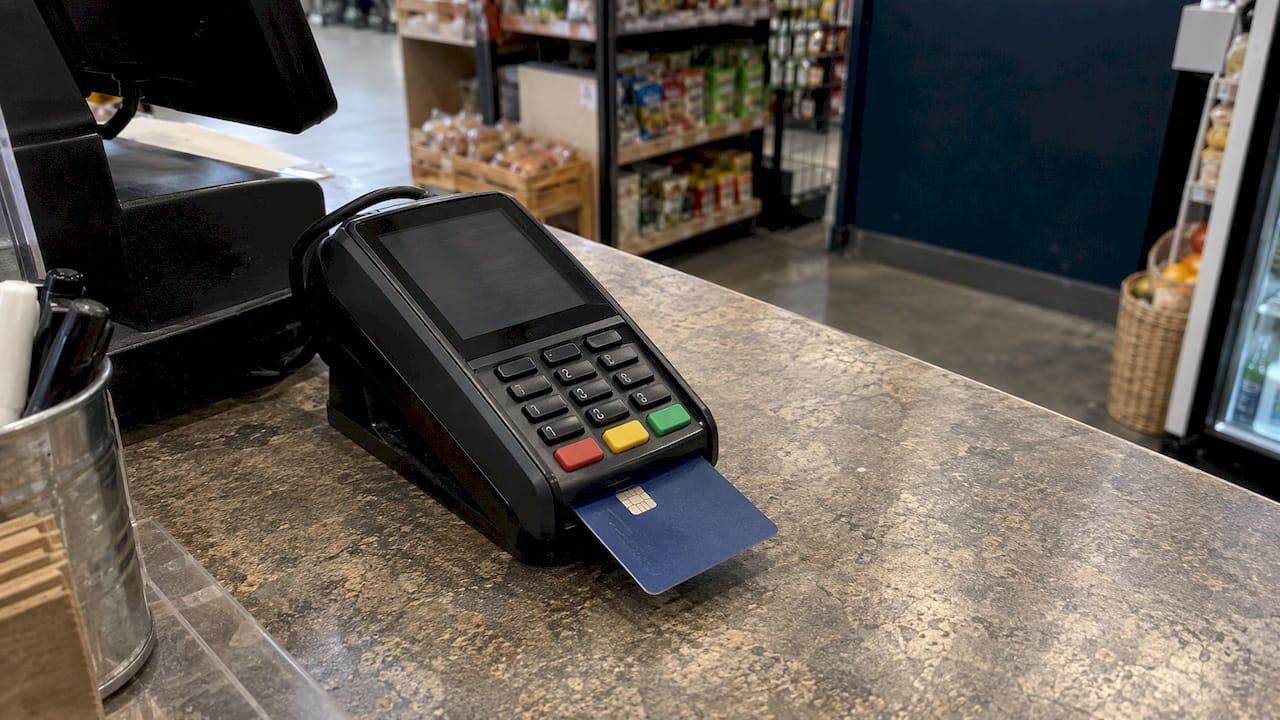
Durbin debit routing is your right, under federal law, to send a debit transaction over any network the card is enabled for, instead of the one your processor or the issuer would pick for you. Every debit card must carry at least two unaffiliated networks, and issuers and networks cannot stop you from choosing between them. The savings come from using that choice together with pricing that shows you the real interchange on each debit sale. We wrote this guide for restaurant chains, healthcare practices, ecommerce stores, CBD retailers and SaaS marketplaces that want to understand the rule and read their statements against it.
TL;DR
- The Durbin Amendment (Section 1075 of the Dodd-Frank Act) is implemented by the Federal Reserve's Regulation II. It does two things: it caps debit interchange for large issuers and it guarantees routing choice.
- Each debit card must be enabled for at least two unaffiliated networks, and no issuer or network may inhibit your ability to route over any enabled network.
- The cap for covered issuers is 21 cents plus 0.05% of the transaction, plus up to 1 cent for fraud prevention. Issuers under $10 billion in assets are exempt, so not every debit card on your statement is capped.
- A 2023 proposal to lower the cap had not been finalized as of the latest report we cite below. Check the Fed's Regulation II page for the current status.
- Pricing that passes interchange through, such as PaySec's Network Offset Pricing, lets you see and track the debit cost on each card type.
Table of Contents
- What Durbin debit routing means in plain terms
- The two-network rule, step by step
- Card-not-present: the 2022 update
- The interchange cap and a worked example
- Who is exempt from the cap
- What changed recently, and what is still open
- How routing and pricing connect on your statement
- What this means for your business type
- What to check with your processor
- See your debit costs line by line
- FAQ
- Sources
What Durbin debit routing means in plain terms
When a customer pays with a debit card, the transaction travels over a card network. Some networks use a PIN, others use a signature. For years, the network that handled a sale was often decided by the issuer, the card brand or a default setting at the processor.
The Durbin Amendment changed that. Section 1075 of the Dodd-Frank Act required the Federal Reserve to specify that issuers enable at least two networks to process debit transactions, including card-not-present transactions, and to set interchange standards that are reasonable and proportional to issuer costs. Regulation II is the rule that carries out both requirements.
Interchange is the fee the merchant's side of a transaction pays to the card issuer. It is the largest part of what you pay on a debit sale. If you want the full picture of how interchange sits inside your rate, our guide to understanding interchange fees covers it.
Two parts of Regulation II matter to a merchant:
- The interchange cap, which limits what covered issuers may earn on each debit transaction.
- The routing rules, which guarantee at least two networks on each card and protect your ability to choose between them.
The Fed's overview states that the rule prohibits issuers and networks from restricting debit processing to fewer than two unaffiliated networks or from inhibiting a merchant's routing choice. Enforcement sits with each institution's federal regulator, such as the OCC, the Fed, the FDIC, the NCUA or the FTC.
The two-network rule, step by step
The routing rule lives in 12 CFR 235.7. Under paragraph (a), an issuer must enable at least two unaffiliated networks. Those networks cannot, by rule, policy or contract, limit their operation to a geographic area, a specific merchant, a merchant type or a transaction type. They also must have taken steps reasonably designed to process the volume that is expected to be routed to them.
Under paragraph (b), no issuer or network may inhibit your ability to direct routing over any network enabled on the card.
Here is what that means in practice.
Unaffiliated means separate owners
Two networks owned by the same company do not count as two. The Fed's compliance guide explains that the enabled pair can be a signature network plus an unaffiliated PIN network, or two unaffiliated PIN networks. ATM-only networks do not count toward the two-network requirement.
You can set routing in advance
You do not have to pick a network for every sale. The official commentary states that a merchant and its acquirer or processor may agree to a pre-determined set of routing choices rather than deciding transaction by transaction. In practice, routing is a setting agreed with your processor, and it is a setting you should know about.
The same commentary says networks may offer incentives that encourage merchants to route a certain way. Those incentives are not prohibited. That is one reason two debit networks can cost different amounts for the same card.
What the issuer must and must not guarantee
The issuer's job is to configure each card so a transaction can run over at least two unaffiliated networks. The commentary also says the issuer does not have to ensure that two networks are actually available to you on every sale. Availability can depend on the card acceptance technologies and networks your business accepts.
This is the practical point for a merchant. The right is real, but the options you can use depend on your terminals, your gateway and the networks your processor connects you to. Check that your setup is built to use what the cards offer.
Card-not-present: the 2022 update
Regulation II originally left some ambiguity about online and phone sales. The Fed's October 11, 2022 final rule closed it. It specified that the two-unaffiliated-networks requirement applies to card-not-present transactions, that issuers must ensure at least two unaffiliated networks are enabled, and standardized terminology. The rule took effect July 1, 2023.
The Fed also allowed issuers to rely on network rules and policies when judging whether enabled networks meet the exclusivity prohibition, according to the ICBA's summary of the final rule.
For ecommerce stores, SaaS marketplaces and any business that keys in or stores cards, this matters. Debit sales without a PIN can often run over PIN networks as well, and routing there is a topic of its own. Our guide to PINless debit for ecommerce covers the rules, routing and savings in detail.
The interchange cap and a worked example
For covered issuers, the Fed's compliance guide states that the base interchange fee may not exceed 21 cents plus 5 basis points of the transaction value. A basis point is one hundredth of a percent, so 5 basis points is 0.05%. An issuer can add up to 1 cent if it meets the Fed's fraud-prevention standards. Those standards require policies to identify and prevent fraud, monitor fraud losses, respond to suspicious transactions and secure card data, and the policies must be reviewed annually.
The Fed's own figures confirm the structure: a non-exempt issuer may not receive more than 21 cents plus 0.05 percent plus a 1-cent fraud adjustment.
Example: a $50 restaurant check on a covered issuer's card
| Component | Amount |
|---|---|
| Base fee | 21.0 cents |
| 0.05% of $50 | 2.5 cents |
| Fraud-prevention adjustment (if the issuer qualifies) | 1.0 cent |
| Maximum issuer interchange | 24.5 cents |
That 24.5 cents matches the figure the Fed gave for a $50 transaction in its October 25, 2023 board meeting transcript.
This cap limits what the issuer receives. It is not your total cost. Your statement also carries network assessments, processor markup and any per-item fees. That is why the pricing model you choose decides how much of the regulated debit rate you actually see.
Who is exempt from the cap
Not every debit card is regulated. Under 12 CFR 235.5, the interchange cap does not apply to:
- Small issuers: banks and credit unions with less than $10 billion in total assets, counted together with affiliates.
- Government-administered program cards, where the card can only transfer or debit funds provided by that program.
- Certain reloadable general-use prepaid cards that are not tied to a cardholder account, not marketed as gift cards, and are the only means of access to the funds.
The government-program and prepaid exemptions stop applying on or after July 21, 2012 if the card may be charged an overdraft fee or a fee for the first withdrawal each month from the issuer's designated ATM network. The Fed's compliance guide confirms the $10 billion small-issuer line.
Two things follow for a merchant:
- Your debit mix produces a blend. Cards from large banks sit under the cap. Cards from community banks and credit unions may carry a higher rate. A single "debit rate" on a statement is an average of both.
- The routing rule is wider than the cap. The Fed's overview explains that exemptions apply to the interchange limits. The two-network requirement applies to all issuers, regardless of asset size.
An exempt card still has two networks enabled, so you still have a routing choice on it. That is often where a pre-set routing preference earns its keep.
What changed recently, and what is still open
There are two layers of news, and it helps to keep them apart.
Settled: the 2022 routing amendments. These took effect on July 1, 2023, and apply to card-not-present transactions, as covered above.
Proposed: a lower cap. In October 2023 the Fed proposed lowering the cap to a 14.4-cent base plus 4 basis points, with the fraud adjustment raised to 1.3 cents. The Fed also proposed updating all three components every two years from its survey of covered issuers. Under the proposal, the maximum for a $50 transaction would fall from 24.5 cents to 17.7 cents. A law-firm readout notes the proposal would not change the exemptions, including the $10 billion small-issuer exemption.
The proposal was originally due to take effect June 30, 2025. In December 2025 the ABA Banking Journal reported it was still not finalized, with the Fed waiting for legal certainty on Regulation II litigation after two district courts reached different conclusions. Bank trade groups have asked the Fed to withdraw it. Rules like this can move, so before you model savings, check the Fed's Regulation II page for the current status.
The practical lesson is simple. If the cap falls, the benefit reaches you only when your pricing passes interchange through. We cover the wider fee picture, including network changes, in our guide to Visa and Mastercard fee changes in 2026.

How routing and pricing connect on your statement
Routing decides which network moves the sale. Pricing decides whether you see the result.
Under interchange-plus or Network Offset Pricing, the interchange on each card is passed through at its actual rate and the processor's markup is shown separately. A regulated debit card shows a regulated interchange. An exempt card shows its own. When a network rule or a routing change lowers a cost, it shows up on your line items.
PaySec's Network Offset Pricing passes through true wholesale interchange rates and avoids hidden fees and flat-rate markups. Merchants typically save 30-60% compared with major processors, and one client cut processing costs by 42%. We explain the model in How Network Offset Pricing works.
For debit specifically, the guide to debit card processing fees walks through what makes up the cost of a sale, and the comparison of PIN debit and signature debit shows how cost, speed and routing differ by method.

What this means for your business type
Restaurant chains
Restaurants run a high count of small and mid-size debit tickets. At a $30 check, the covered-issuer cap works out to 21 cents plus 1.5 cents plus 1 cent, or 23.5 cents at most. Across thousands of tickets a week and many locations, a per-card view of interchange is how an operator sees which locations and card types drive cost. In-store terminals with a PIN pad are the natural place for PIN debit routing. PaySec offers Free Placement of terminals at $0 per month.
Healthcare practices
Practices take patient balances, copays and recurring payment plans, often by debit. Routing rules apply to card-not-present sales too, so a patient paying through a portal falls under the same two-network rule. Payment data in this setting needs strong compliance, and PaySec holds PCI DSS Level 1 and SOC 2 compliance.
Ecommerce store owners
Since the 2022 amendment, the two-network rule covers online debit. Clean line-item reporting lets a store owner compare debit and credit costs by card type and spot where an average hides a spread. Our piece on lowering debit vs credit fees lays out five data-backed steps. PaySec's eCommerce payment processing offers a gateway with fraud prevention.
CBD and other high-risk retailers
High-risk merchants often face opaque pricing. Durbin's routing rights belong to the merchant side of the transaction, and a transparent pricing structure is how you see what each card costs. PaySec supports fast approvals for high-risk verticals, with no long-term contracts and no minimums.
SaaS and marketplace owners
Subscription and marketplace businesses depend on recurring debit payments. Card-not-present routing applies to these sales, and cost differences between cards compound over every billing cycle. PaySec offers recurring billing and ACH alongside card acceptance, and enhanced data optimization for B2B savings.
What to check with your processor
You do not need to read Regulation II line by line. You need to read your own statement and ask a few precise questions.
- Does the statement break out interchange by card type? A single blended debit rate cannot show you whether you benefit from the cap, the exemptions or a network incentive.
- Which debit networks does your setup connect to? The issuer enables two or more. Your terminals and gateway decide which of them you can actually use.
- Is routing a pre-set preference or a default? The commentary lets you agree a set of routing choices in advance with your processor. Know what yours is.
- Does your online checkout route debit the same way as in-store? Card-not-present debit falls under the rule since July 1, 2023.
- How are surcharges and debit handled? Rules on debit surcharges differ from credit, which we explain in U.S. debit card surcharges and the card brand surcharge rules.
- Can you export transaction-level reports? Detailed reporting is what turns routing from a setting into a measurable saving.
Once your statement is clear, reconcile it against your deposits and your tax forms. A 1099-K reconciliation checklist helps U.S. sellers match processor totals, fees and payouts before filing.
A note on compliance records
Compliance duties under Regulation II fall mainly on issuers and networks. Issuers must retain compliance records for at least five years after the end of the calendar year in which the transaction occurred, and may not receive net compensation from a network for debit activity within a calendar year. For you, the useful step is keeping your own statements and reports in an organized form.
Our view: routing is a right, transparency is how you use it
Routing choice and the interchange cap were designed to lower the cost of accepting debit. Whether that reaches a merchant depends on what the statement shows. When interchange is passed through and itemized, a merchant can see which cards are regulated, which are exempt and where a network incentive applies.
That is why we built Network Offset Pricing around true wholesale interchange rates, with no hidden fees, no minimums and no long-term contracts. Our merchants across 18+ industries typically save 30-60% compared with major processors, and detailed transaction reporting gives restaurants, practices, stores, CBD retailers and SaaS marketplaces a clear view of every debit sale.
Rules will keep moving, including the pending cap proposal. A pricing model that passes interchange through means that when the rule changes, your statement changes with it.
PaySec Marketing Team
See your debit costs line by line
PaySec's Network Offset Pricing passes through true wholesale interchange and shows it in detailed transaction reporting. There are no monthly minimums and no long-term contracts, and approvals are fast, including for high-risk verticals. Compliance is covered with PCI DSS Level 1 and SOC 2. See the plans on our pricing page or explore merchant services for in-store, online, mobile, recurring and ACH payments.
If you want a plain-language walkthrough of the model first, read Network Offset Pricing: How It Works, or start with the 90 day plan in our card network fees playbook.
FAQ
What is the Durbin Amendment in simple terms?
It is part of the 2010 Dodd-Frank Act, and the Federal Reserve carries it out through Regulation II. It limits the interchange fees large debit card issuers can receive and requires every debit card to be enabled for at least two unaffiliated networks. Merchants keep the right to choose between them.
Does Durbin routing apply to online debit sales?
Yes. The Fed's 2022 final rule specified that the two-network requirement applies to card-not-present transactions, effective July 1, 2023. Online stores, subscription businesses and phone-order merchants fall under it.
Which debit cards are not covered by the interchange cap?
Cards from issuers with less than $10 billion in total assets, including affiliates, are exempt from the cap. So are qualifying government-program cards and certain reloadable prepaid cards. The routing requirement still applies to the issuer's cards.
Has the lower debit interchange cap taken effect?
The Fed proposed a 14.4-cent base, 4 basis points and a 1.3-cent fraud adjustment in October 2023. As of the December 2025 report we cite, it had not been finalized. Check the Fed's Regulation II page for the latest status.
How do I know if I am benefiting from Durbin?
Look at your statement. If interchange is itemized by card type, you can see the regulated and exempt debit rates directly. A single blended rate hides that detail, so ask for line-item reporting.
Sources
- ICBA Payments: Final Updates to Debit Cards Rules
- Federal Reserve Board: Regulation II overview
- eCFR: 12 CFR Part 235, Debit Card Interchange Fees and Routing
- Federal Reserve: Regulation II compliance guide
- Federal Register: Debit Card Interchange Fees and Routing, October 11, 2022
- Federal Reserve: Average Debit Card Interchange Fee by Payment Card Network
- Federal Reserve: Section 235.5, Exemptions
- Federal Reserve: Open Board Meeting transcript, October 25, 2023
- Morrison Foerster: Quick Readout on the Fed's October 2023 proposal
- ABA Banking Journal: Associations ask Fed to withdraw proposal to lower debit card fee cap
- Federal Reserve: Supporting Statement for FR II recordkeeping