

Yes, true month-to-month merchant accounts exist, but plenty of "no contract" marketing hides monthly minimums, equipment leases, or reseller agreements that lock you in any way. Before signing anything, request the merchant agreement and any equipment lease schedule separately, and read both in full. The account itself might be flexible even when the paperwork attached to it isn't.
TL;DR:
- True month-to-month merchant accounts require careful review of lease and auto-renewal clauses to avoid hidden multi-year commitments hidden as "no contract" offers.
- Monthly minimum fees are common and can offset "no fee" claims, especially when transaction volume falls below set thresholds, raising overall costs.
- Fixed rates, interchange-plus, or blended pricing each have different transparency levels, with scale and card mix influencing the most cost-effective choice.
- Canceling a genuine month-to-month account is straightforward with proper notice, but equipment leases run separately and may require additional steps to terminate.
- Transparency in contracts and detailed statement analysis help merchants prevent hidden fees and make better, informed processing decisions.
Table of Contents
- What "Month-to-Month" Actually Means for a Merchant Account
- Fees to Watch: Monthly Minimums and Hidden Charges
- How to Verify a True Month-to-Month Account: A Contract Checklist
- Who Benefits Most From a Flexible, No-Contract Setup
- How to Get Approved Fast for a Merchant Account
- Trade-Offs and Alternatives Worth Considering
- How to Switch or Cancel Without Penalties
- Does This Affect Your Credit Score or Funding Eligibility?
- A Flexible Option Built Around Transparent Pricing
- Why Vigilance Beats Blind Trust in Any Merchant Agreement
- Sources
- FAQ
What "Month-to-Month" Actually Means for a Merchant Account
A month-to-month merchant account lets you cancel processing services at any time, typically with 30 days' written notice and no penalty. A fixed-term contract, by contrast, locks you in for one to three years and often auto-renews unless you cancel within a narrow window, sometimes just 30 or 60 days before the anniversary date.
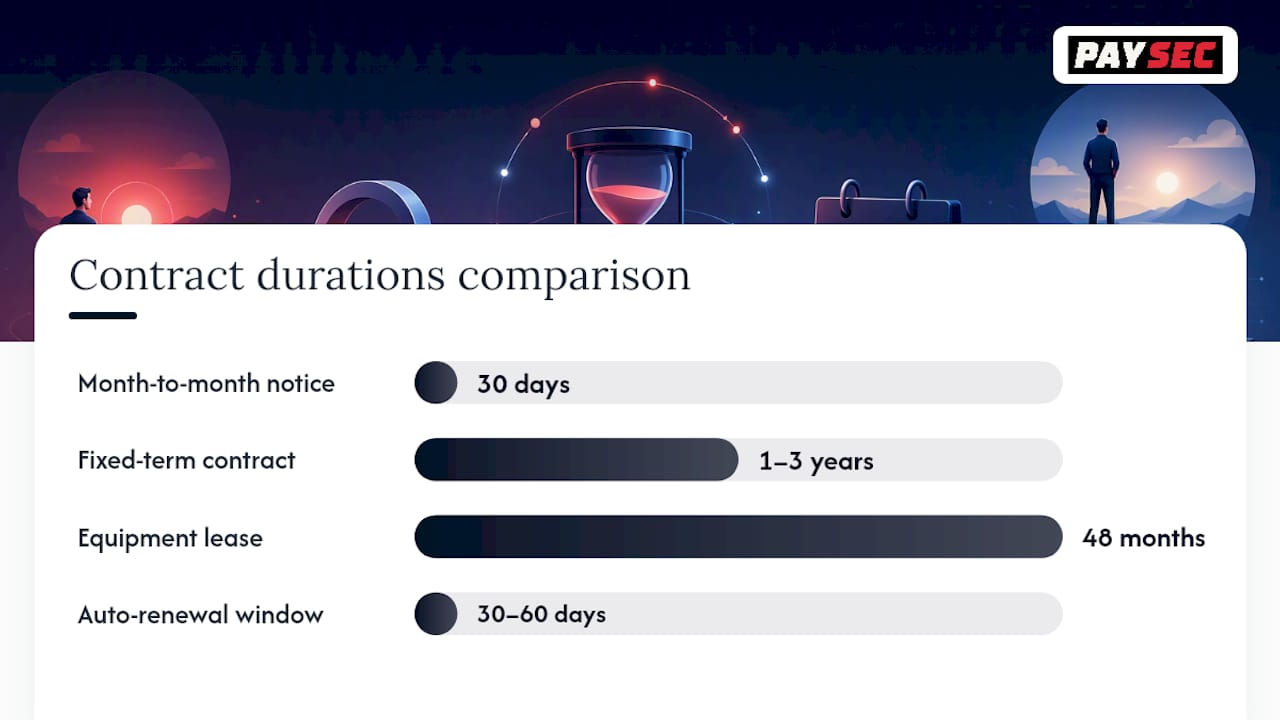
The marketing language around this is where things get murky. "No contract" can mean the processing agreement itself is month-to-month, while a separate equipment lease runs for 48 months with no early exit. Processors and their reseller partners aren't always the same company, and that distinction matters more than most merchants realize when they're comparing offers.
Watch for these patterns before you take "no contract" at face value:
- Evergreen clauses: the agreement auto-renews for another full term unless you cancel in writing during a specific window.
- Reseller bundling: an independent sales organization sells you processing on a month-to-month basis, then bundles in a multi-year equipment lease from a third-party leasing company.
- Separate lease agreements: even if you cancel processing, the equipment lease can legally survive, since it's a different contract with a different party entirely.
A true no-contract account requires checking four specific items before you sign: term length, early termination fee, equipment lease language, and auto-renewal clauses. Miss any one of them and "month-to-month" becomes a marketing phrase rather than an enforceable term.
Fees to Watch: Monthly Minimums and Hidden Charges
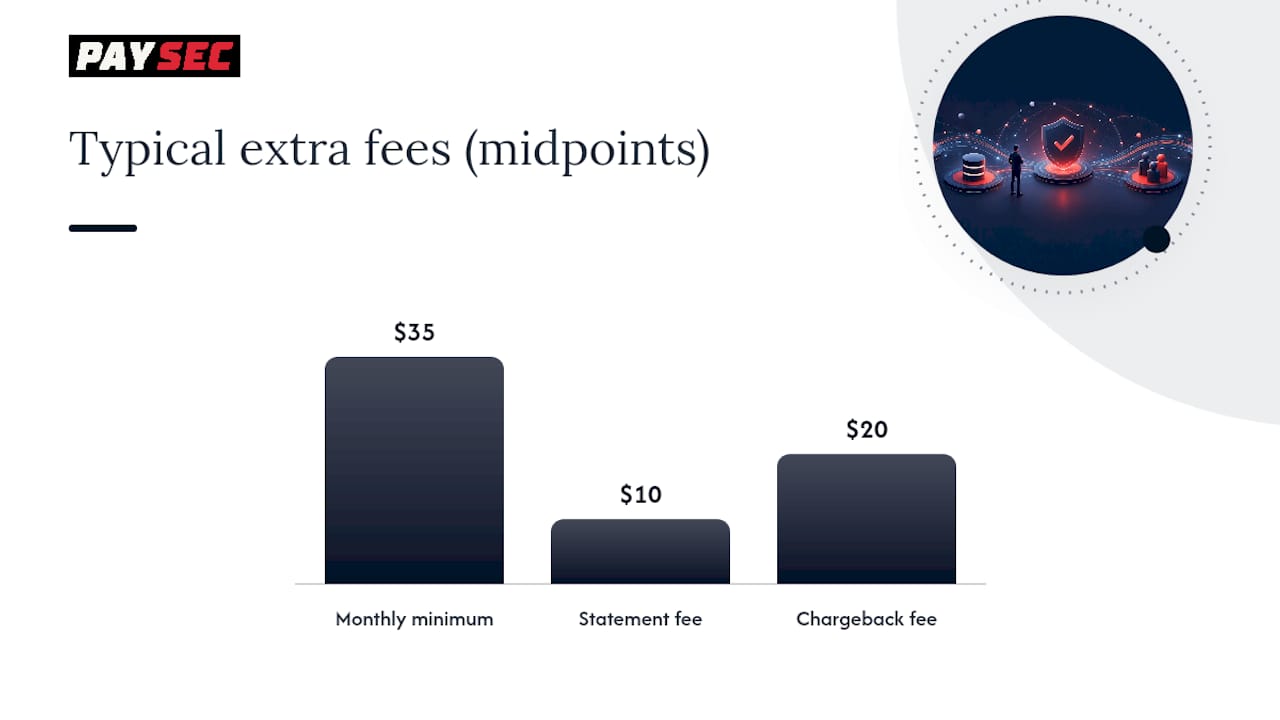
Monthly minimums are the first place "no fee" claims fall apart. About 30% of merchant contracts include a monthly minimum fee that kicks in when your transaction fees don't add up to a set threshold, usually between $20 and $50 a month. If your business processes $15 worth of fees in a slow month and the minimum is $35, you pay the difference regardless.
Per-transaction pricing is where the real cost lives, and it comes in three common structures:
- Flat-rate pricing: one percentage plus a fixed fee per swipe, simple to understand but usually the most expensive at higher volumes.
- Interchange-plus pricing: the actual interchange rate set by card networks, plus a fixed markup, which tends to be the most transparent structure available.
- Blended pricing: a single average rate that mixes debit, credit, and rewards card costs together, making it hard to see what you're actually paying for each transaction.
Typical effective rate: Most small businesses pay somewhere between 1.5% and 3.5% per transaction, depending on the pricing model, card mix, and monthly volume.
Beyond the headline rate, look for statement fees (often $5 to $15 a month), PCI compliance fees, batch fees charged each time you close out the day's transactions, authorization fees on every swipe whether it's approved or not, and chargeback fees that can run $15 to $25 per dispute. None of these show up in the advertised rate, and together they can add several hundred dollars a year to your processing bill. Paysec's guide to hidden fees in a processing statement breaks down exactly which line items to flag on your next bill.
How to Verify a True Month-to-Month Account: A Contract Checklist
Reading a merchant agreement top to bottom isn't fun, but four clauses determine whether "month-to-month" is real or just a talking point in a sales call.
- Term length. Look for the actual word "month-to-month" or "no minimum term" written into the agreement, not just stated verbally by a sales rep.
- Early termination fee (ETF). Some agreements waive this for processing but still attach one to a bundled equipment lease, so check both documents.
- Equipment lease language. Ask directly whether the terminal or POS system is leased, financed, or purchased outright, and get the lease term in writing.
- Auto-renewal clauses. Find the cancellation notice window. A 30-day notice period is reasonable; anything requiring 90 days or more written notice is a red flag.
Before signing, request three documents in writing: the full merchant agreement, the equipment lease schedule (if any), and a sample monthly statement showing every fee category. If a sales rep hesitates to provide any of these, treat that as your answer.
Pro Tip: Cross out any clause you don't want and initial the change before you sign. Many processors will accept reasonable edits rather than lose the sale, especially on auto-renewal notice periods.
Who Benefits Most From a Flexible, No-Contract Setup
Flexible accounts aren't the right fit for every business, but for some, they solve a real problem.
- Seasonal sellers (holiday pop-ups, summer markets, tax-season services) avoid paying for processing capacity they don't use year-round.
- Low-volume operations and side businesses often can't justify a multi-year commitment when monthly revenue still fluctuates.
- Businesses piloting a new sales channel, like a restaurant testing online ordering or a retailer trying its first POS system, want the option to switch without penalty if the experiment doesn't work.
Higher-volume, stable businesses sometimes come out ahead with a negotiated interchange-plus plan instead, since scale often buys a lower effective rate than a flexible month-to-month structure offers. The trade-off comes down to your average ticket size and how predictable your monthly volume actually is.
How to Get Approved Fast for a Merchant Account
Underwriters move faster when your paperwork is complete on the first submission. Gather these before you apply, and consider boosting your online presence with Google and ChatGPT traffic on autopilot for your business growth:
- Bank and processing statements, typically three to six months, showing consistent deposit activity.
- Government-issued ID for the business owner and any listed principals.
- Business registration documents, including your EIN and articles of incorporation or DBA filing.
- Website and policy pages, covering refund policy, terms of service, and a clear description of what you sell.
Underwriters focus on your Merchant Category Code (MCC), monthly processing volume, average ticket size, chargeback history, and both personal and business credit. Collecting three to six months of clean statements and clear website policies up front shortens the back-and-forth considerably.
Approval speed depends heavily on account type. PayFac and aggregator accounts often approve same-day; dedicated merchant accounts typically take 3 to 7 business days; high-risk verticals like CBD or nutraceuticals can take 7 to 21 days depending on how complete your documentation is.
Trade-Offs and Alternatives Worth Considering
Flexibility has a cost, and it usually shows up in the per-transaction rate rather than a monthly bill. A month-to-month account with no minimum often charges a slightly higher effective rate than a negotiated, volume-based plan would, since the processor prices in the risk of you leaving anytime.
Three category-level alternatives worth comparing:
- Pay-as-you-go aggregators, which skip monthly fees entirely but often charge a flat rate on every transaction.
- Subscription-based processors, which charge a fixed monthly fee in exchange for lower per-swipe rates, a better fit once volume climbs.
- Negotiated interchange-plus plans, where a fixed markup over true interchange usually beats blended or flat-rate pricing at scale.
Editorial roundups of "no monthly fee" processors often emphasize comparing total effective cost rather than the advertised monthly fee alone, since a $0 monthly account with a 3.5% rate can cost more than a $10 monthly account charging 1.8%. A quick way to model this: divide your current monthly fee savings by the rate difference between two offers, expressed as a percentage of your average transaction, to find the volume where a subscription plan starts paying for itself. Paysec's comparison of flat-rate, interchange-plus, and Network Offset Pricing walks through this math in more detail.
How to Switch or Cancel Without Penalties
Canceling a genuine month-to-month account is straightforward if you've done the contract review upfront. Send written cancellation notice, typically by certified mail or through the processor's official cancellation form, at least 30 days before you want the account closed. Keep a copy of that notice and any confirmation reply for your records.
Before you send it, confirm three things: your final statement date, whether any batched transactions are still settling, and whether a reserve holdback (common in high-risk processing) needs to clear before funds release. Switching processors works best when the new account is fully approved and tested with a small transaction before you shut down the old one, so there's no gap in your ability to accept payments.
If an equipment lease is attached separately from your processing agreement, canceling processing does not cancel the lease. That contract runs on its own terms, and you'll need to follow its specific buyout or return process, which is exactly why checking the lease schedule before you sign the merchant agreement matters so much.
One overlooked step: notify any recurring billing customers or subscription services tied to your old processor's tokens before the switch, since stored card tokens generally don't transfer between processors automatically. Paysec's guide on payment processing for small business covers this transition process in more depth if you're planning a switch soon.
Does This Affect Your Credit Score or Funding Eligibility?
Applying for a standard merchant account usually involves a soft credit pull on the business owner, which does not affect your personal credit score. Some processors run a hard inquiry for higher-risk accounts or larger credit facilities, so it's worth asking directly during the application which type of check they perform.
A month-to-month structure itself has no inherent effect on your credit profile. What matters to lenders and future processors is your processing history: consistent volume, low chargeback rates, and no unresolved disputes. Since a flexible account doesn't tie you to one processor for years, some merchants build a cleaner processing history by staying with a provider that earns their business month after month rather than being contractually stuck.
Funding eligibility for merchant cash advances or revenue-based financing depends heavily on consistent processing statements, typically the same three to six months of history underwriters ask for during account approval. A month-to-month account doesn't disqualify you from these programs. If anything, a stable processing history with transparent statement reporting, the kind that's easy to produce when your provider offers detailed transaction reporting, tends to make that underwriting conversation faster.
A Flexible Option Built Around Transparent Pricing
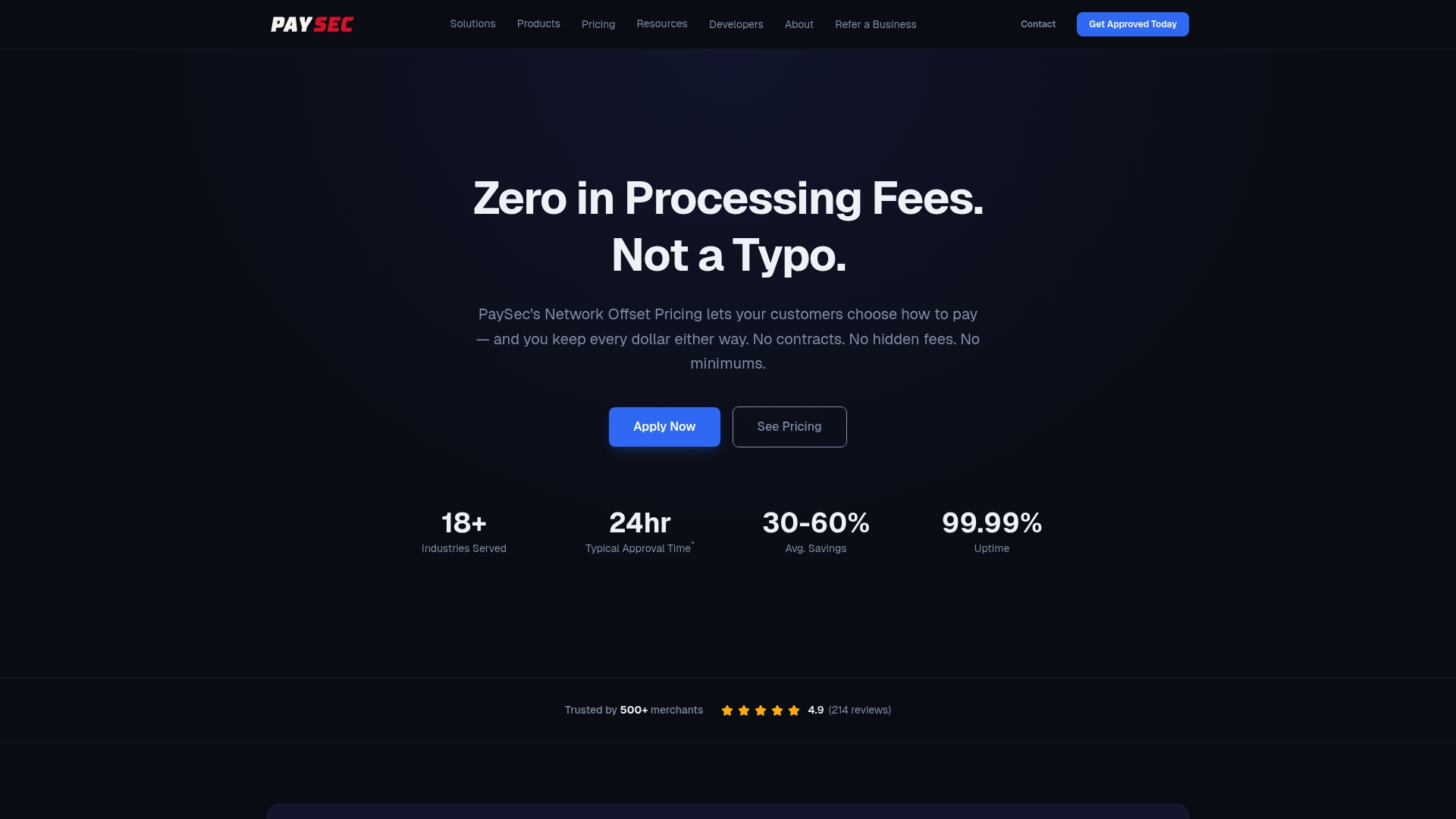
Paysec offers Network Offset Pricing with no minimums and no long-term contracts, built specifically for merchants who want the flexibility of month-to-month terms without the guesswork of blended or flat-rate billing. Clients across SaaS, restaurants, eCommerce, healthcare, and CBD retail have reported measurable savings of 30-60% compared to major processors, with an average 42% reduction in processing costs, based on Paysec's own client results.
Every account comes with detailed transaction reporting so you can see exactly what you're paying on every swipe, not just an average rate buried in a monthly summary. That level of visibility is what the contract checklist in this article is really about: knowing what you're signing before you sign it. Paysec's merchant services overview covers in-store processing, eCommerce gateway integration, mobile payments, and recurring billing, all under the same transparent, contract-free structure.
If you're currently comparing offers or reviewing a lease schedule from another provider, check Paysec's pricing plans to see how Network Offset Pricing, Flat Rate, or Custom Enterprise options compare to what's on the table. Request a quote and get a rate comparison based on your actual statements, not a hypothetical average.
Why Vigilance Beats Blind Trust in Any Merchant Agreement
The checklist approach in this article isn't just a formality. Most merchants who get burned by long-term commitments didn't get tricked by an outright lie. They got tripped up by a document they never fully read, usually the equipment lease sitting behind the processing agreement they were told was "no contract."
Transparency and a little vigilance solve most of what goes wrong in this industry. Paysec's approach, with detailed transaction reporting, no minimums, and no long-term contracts, reflects a straightforward belief: merchants make better decisions when they can see exactly what they're paying and aren't boxed into terms they didn't fully understand. Run through the four-clause checklist before your next signature, and don't hesitate to ask a processor directly for the lease schedule, sample statement, and cancellation terms in writing. If a provider doesn't produce those documents, that tells you what you need to know.
— PaySec Marketing Team
Sources
- Best No-Contract Payment Processors 2026 | myPayAdvisor
- How to Get a Merchant Account: 2026 Application Guide
FAQ
What Is the Easiest Merchant Account to Get?
PayFac and aggregator-style accounts are generally the easiest to get approved for, often same-day, since they use simplified underwriting and pool risk across many small merchants. Dedicated merchant accounts take longer, typically 3 to 7 business days, but usually offer better rates once you're processing steady volume.
Can You Give Examples of Merchant Account Types?
Common types include dedicated merchant accounts tied to one business, PayFac or aggregator accounts that onboard merchants quickly under a shared master account, and high-risk accounts built for industries like CBD or nutraceuticals that need specialized underwriting. Services offered include dedicated accounts, eCommerce gateway integration, and mobile payments across various industries.
Which Provider Is Best for a Month-to-Month Merchant Account?
The best fit depends on your volume, industry, and how much you value transparent, itemized pricing over a flat blended rate. Network Offset Pricing models built around no minimums and no long-term contracts can be suitable for merchants seeking flexible and transparent pricing options.